
Program Manager, HT Institute
2024 Winter Newsletter
Horticultural Therapy is making an impact on people’s lives.
Read more about how it’s happening.
HTI Director’s Note: Reap and Record
By Rebecca Haller, HTM

IPPS 2024!
Theme: Cultivation of human health thorough horticulture: from gardening lifestyle to professional intervention
Welcome to winter and a new calendar year. With planning no doubt underway for 2024, please mark your calendars for the 16th International People Plant Symposium (IPPS) to be held in Reading, England July 10-12. The first time to be held in the UK, we welcome the chance to see the work being done there firsthand in pre-conference tours. A biennial symposium of the International People Plant Council, the sponsoring organizations for 2024 are Thrive in the UK, the Horticultural Therapy Institute (HTI) in the US, and Konkuk University in South Korea, in collaboration with the International Society for Horticultural Science (ISHS).
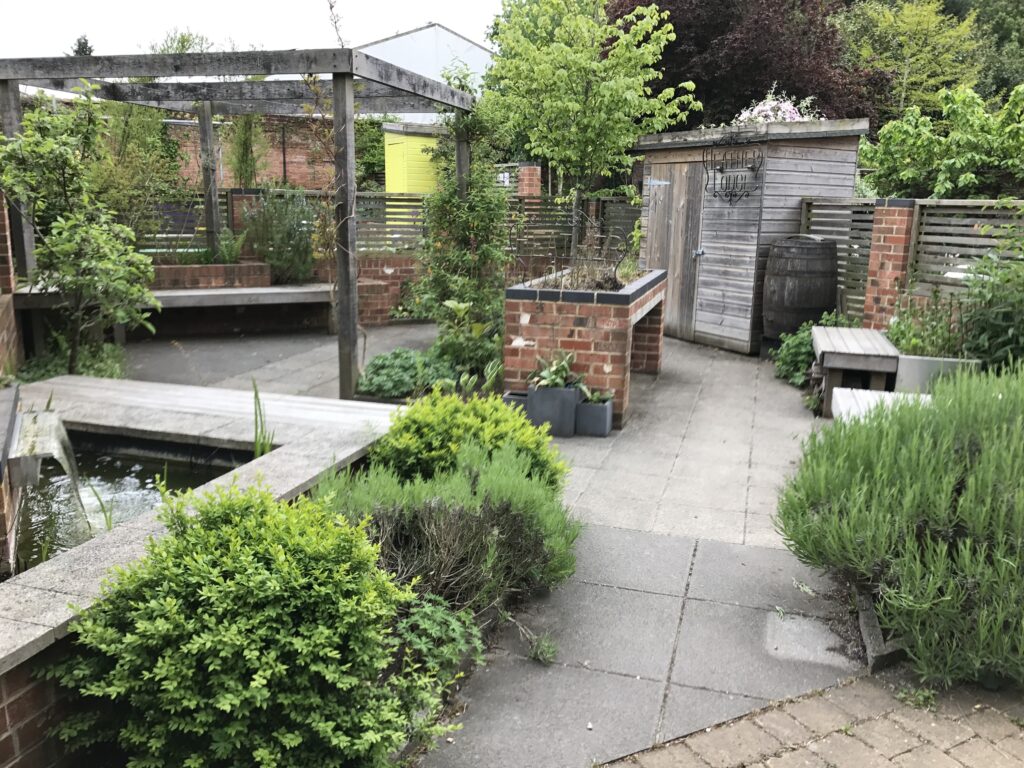
Here is a chance to expand your perspective and evidence of the many ways that horticulture endeavors improve human health. Hear about, and consider contributing to, research and trends in people-plant relations – from a gardening lifestyle to the practice of horticultural therapy. Discuss the definitions of horticultural therapy and discover its use in countries with long-standing practices as well as those charting new paths in the field. Engage face-to-face with colleagues from around the world for innovative viewpoints, potential collaborations, and connections.
From a personal standpoint, the previous symposia have been instrumental in enhancing my understanding of the many views and approaches to our multi-faceted field, as well as in developing life-long professional relationships.
Plan now to take advantage of this wonderful opportunity!
(Editor’s note: See a call for abstracts in this newsletter.)
International People Plant Symposium in the UK
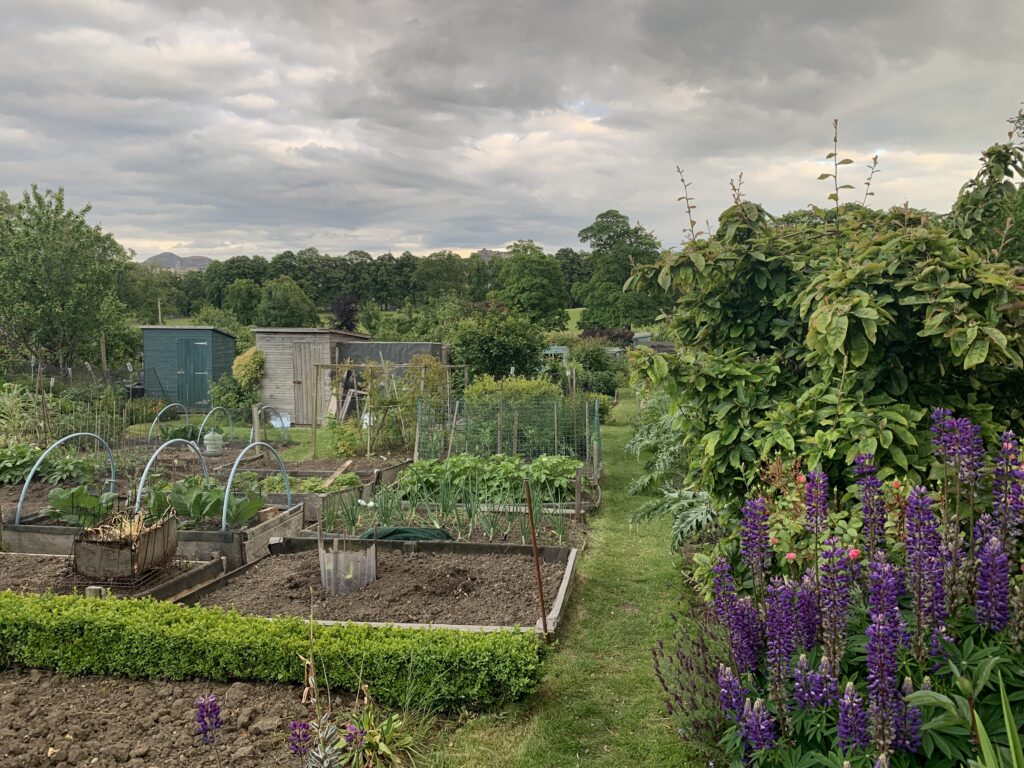
Plan now to attend the 16th International People Plant Symposium (IPPS) to be held in Reading, England July 10-12, 2024 hosted by Thrive and the International Society for Horticultural Science (ISHS) Horticultural Therapy Working Group. The Horticultural Therapy Institute is a co-sponsor and HTI’s director is a convener of the symposium. The theme, “Cultivation of Human Health Through Horticulture: From Gardening Lifestyle to Professional Intervention”, covers a wide range of topics that will be of interest to our readers. If you wish to present a paper or poster session, abstract submission is now open and closes Feb. 29, 2024. Acceptance notification is March 31, 2024. For more information on abstract submissions go HTI’s home page and see the flyer or ISHS. For details of the symposium visit Thrive. Join others from around the world for this exciting opportunity to discuss people-plant relationships and the effect that plants have on human health and well-being.
Program Profile:
Horticultural Therapy with Elders in a Nursing Home
By: Brooke Moren, CTRS
Growth is a Process
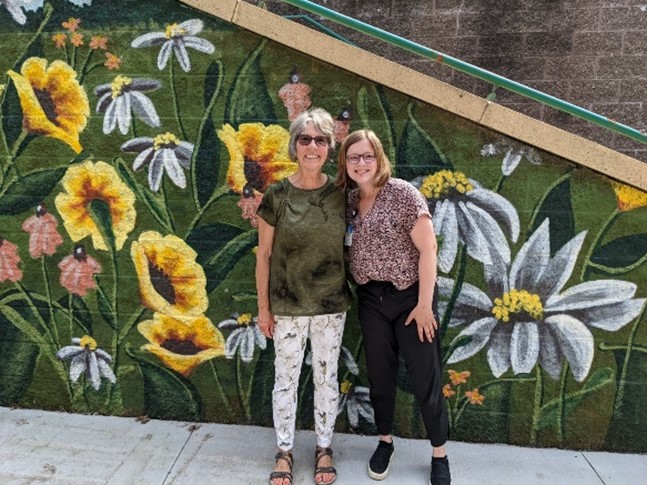
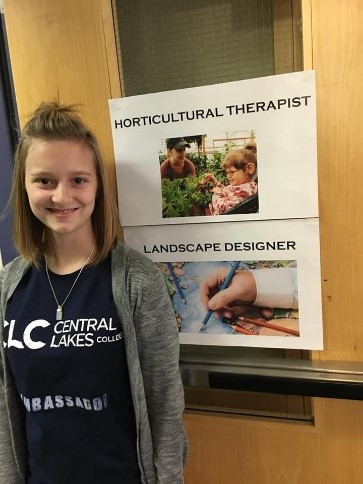
At Central Lakes College in the horticulture department, we were often told “keep your flappers open,” and when I did that, I discovered horticulture therapy (HT) as a career. I worked towards finishing my bachelor’s degree in Recreation Therapy leading to my credential as a Certified Therapeutic Recreation Specialist (CTRS). I accepted a position in healthcare (skilled nursing facility) in 2020 because my goal was to bring HT into healthcare. Starting a position in healthcare was the “seed” and then it “germinated”, and I brought forth my passion and idea to implement in this setting. I completed the Horticultural Therapy Institute coursework and am currently interning with Pam Catlin, HTR (past HTI faculty) via a distance internship at the same skilled nursing facility I started at almost four years ago. Growth is a process.
According to the article titled, “Daily Life in a Nursing Home: Has it Changed in 25 Years?” they [residents] spent 65% of their time doing little to nothing (Ice, 2002). Doing little to nothing (inactivity) has the potential to lead to deteriorating health, cause loneliness, lose meaningful life, and ultimately lead to a poor quality of life. The Centers for Medicare and Medicaid Services (CMS) has regulations to help nursing facilities provide the best possible care to the people who are living there. According to document titled, “State Operations Manual Appendix PP – Guidance to Surveyors for Long Term Care Facilities,” “Residents have indicated that daily life and involvement should be meaningful. Activities are meaningful when they reflect a person’s interests and lifestyle, are enjoyable to the person, help the person to feel useful, and provide a sense of belonging,” (CMS, 2023).
The program population that I work with daily are elderly individuals living in a skilled nursing facility with long term care needs as well as older adults who are admitted for a short rehabilitation stay. When I first started to bring my idea forward to develop a horticultural therapy program, I applied for and received grant funds from the organization foundation in which we were able to purchase a grow light seed rack and maintenance free raised garden beds. These two items provided the opportunity to grow. After these two larger items were purchased, we moved to purchasing supplies with funds from the therapeutic recreation budget.
Garden to Table
Many residents were taught to grow food in the garden as young children to support the needs of their family so that they had food on the table to eat. The activity of growing food was purposeful for our residents when they were younger because they were growing something that they could eventually eat and harvest. They knew they had to grow food to support their family. This task is a meaningful household activity that reflects the prior lifestyle of the elderly population.
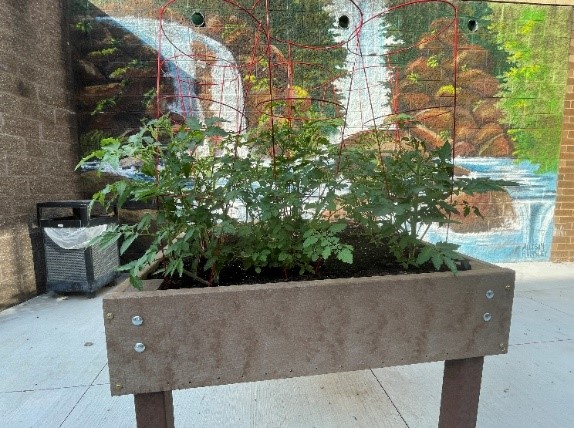
In my program, we focus on garden-to-table during the spring/summer, and put the garden to rest in the fall due to the frigid winter temperature. My aspiration is to continue the garden-to-table process with indoor hydroponic growth during the winter months. The garden-table-process provides the residents the opportunity to be active in all stages of growing from planting seeds, nurturing, transplanting, observing growth, harvesting, and then eating the product that was grown by them. All food has a story— and our story will be created by the residents. This will provide a “normal activity” as discussed in an article titled, “Meaning in Life: The Perspective of Long-Term Care Residents” in which “Engaging in normal activities emphasized the importance of feeling a sense of contribution and being valued, which resulted in feelings of self and identity, thereby creating meaning in life” (Welsh, Moore, Getzlaf, 2012). I have seen firsthand how meaningful this program is for the residents as it has provided engagement, continued learning, and makes them feel a part of something that means so much to them.
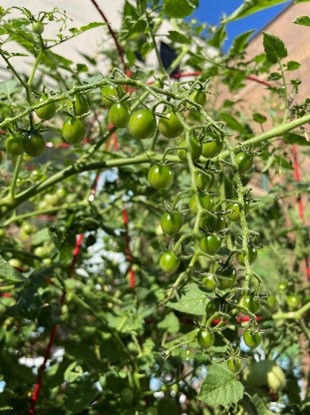
During the 2023 season, we harvested more than 26.9 pounds of produce that was provided to our dietary department to prepare in various ways for the residents. We also shared with staff so they could reap the benefits of the garden as well. The 2023 favorite was Tomato “Red Currant” due to its mico mini in size. Growth is a process, and growing food shows that in such a great way. As you see in the pictures above:
As 2023 ended and 2024 begins I am reminded Growth is a process as I look at where I started, where the program started, where it is now, and look forward to 2024 and what it might become! Happy 2024!
Brooke is a recent HTI graduate and the activity director at Monticello Care Center in Minnesota.
Citations:
Gillian Harper Ice, Daily life in a nursing home: Has it changed in 25 years?, Journal of Aging Studies,
Volume 16, Issue 4,2002,Pages 345-359, ISSN 0890-4065, https://doi.org/10.1016/S0890-4065(02)00069-5.
(https://www.sciencedirect.com/science/article/pii/S0890406502000695)
“State Operations Manual – Centers for Medicare & Medicaid Services.” Www.Cms.Gov, Center for Medicare and Medicaid , 23 Feb. 2023, www.cms.gov/medicare/provider-enrollment-and-certification/guidanceforlawsandregulations/downloads/appendix-pp-state-operations manual.pdf. Welsh D, Moore SL, Getzlaf BA. Meaning in life: the perspective of long-term care residents. Res Gerontol Nurs. 2012 Jul;5(3):185-94. doi: 10.3928/19404921-20120605-05. Epub 2012 Jun 15. PMID: 22716655.
Tips for Practice: Honoring the Stillness
By Diana Sette, horticultural therapist at University Hospitals’ Rainbow Babies & Children’s Hospital
Stillness within Seasonal Cycles
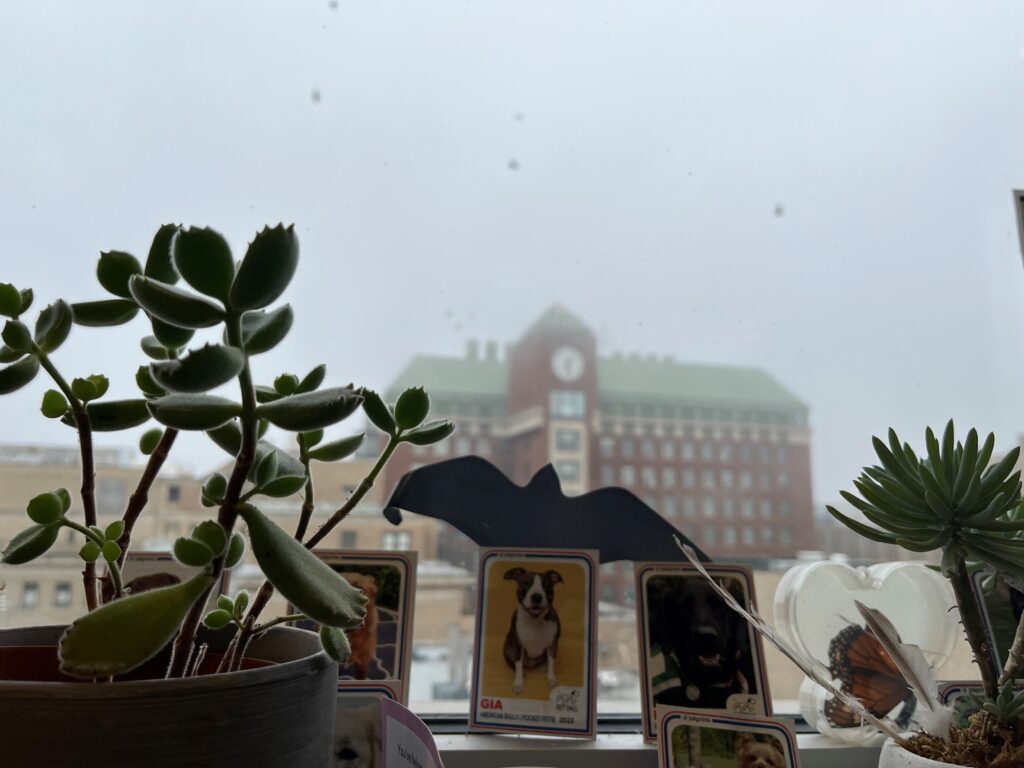
From where I am writing in the Northern Hemisphere, we are at that point in the earth’s rotation where we are turned farthest from the sun and it’s cold. Recently, the days have been wrapped by a thick blanket of fog, making it nearly impossible to see buildings only 100 yards away. It is as if aside from this small visible circle around the hospital, the rest of the world has disappeared, swallowed up by the fog. Even the clouds seem still, as they sit on the rooftops, without much motivation to evaporate into rivers, rain, or snow.
About a week before, we had snow here, and a few feet of insulating snow piled upon the benches and garden beds. Even sound was still, with faint touches of snowflakes tip toeing on sunflower stems and Chamaecyparis obtusa boughs.
Nature provides endless lessons for the practice of horticultural therapy, and when that comes to the element of water that couldn’t be truer. Water, often imagined as a river or lake, or raining from the skies, or as a puddle for splashing, or running from the faucet to fill our watering-can to care for our plants. Water is always in motion, always changing, a transformational force that is the basis for all Life. And yet, even water can be still.
Fog and snow are moments when we can be reminded of the importance of stillness in the cycles of Nature. One that cannot be avoided, but must be embraced for the renewal, rehydration, and replenishment of the earth and us.
Stillness with the Plants
When it comes to my practice as a horticultural therapist, watering is one the activities where I find I am most still, and one of the activities where I learn the most about the health of the plants I care for. While many times I may be moving plants around, engaging patients with various plants, transplanting, or inventorying plants, there is a different intention and pace that happens when it comes to watering. Every gardener knows how one must stand or sit by plants for many moments to water deeply. I often find for myself that watering is also the moment when I can check in with each plant, observing their leaves and stems, their colors, the thickness of their leaves, or any indications of needing further attention. The stillness that comes during watering is often the moments I notice the most about my plants, be it new growth, new pests, broken leaves, or any signs of decay or disease. It’s a moment to check-in and take stock. That stillness can help direct me in assessing what my next plant care activities need to be.
Stillness with Patients
Watering is also one of the activities that patients and volunteers tell me they enjoy the most. One client recently told me that in their mind they associate water with growth, and she felt by watering she was directly helping the plants to grow.
While the simple activity of watering can be highly beneficial and therapeutic as a part of a horticultural therapy intervention, it is the practice of stillness that I have found is one of the elements that brings the greatest impact. It is not a stillness that is forced, or policed like a “time out”, but rather it is inherent in the activities to engage with the nature world. Stillness, and being still, is also a practice tip that I think can easily be overlooked in horticultural therapy interventions where often the emphasis can be on activating patients planting and moving about the garden.
What does the practice of stillness look like with patients? I have found that the most effective use of stillness in your practice is when stillness, and the pace of stillness is guided by the patients. For example, if I am facilitating a planting activity with patients, and I provide a few choices of which the patient can select, I am still when they make that choice. I let them make that choice at their own pace. I will still provide information about the plants before they select, but by not rushing forward in selecting for them in order to “more efficiently” get to the next step, this enables patients to have a sense of autonomy, and a sense of control and choice. Working within a children’s hospital setting, many of the youth patients being hospitalized do not have the opportunity to make choices or express a sense of control or autonomy in other aspects of their care, as they often have to use their coping skills to undergo procedures that may be painful, scary and something that they wouldn’t choose on their own. Horticultural therapy is an opportunity to support their psycho-social-emotional well-being by providing those opportunities for self-agency where possible, without pushing them along to the next step before they’re ready.
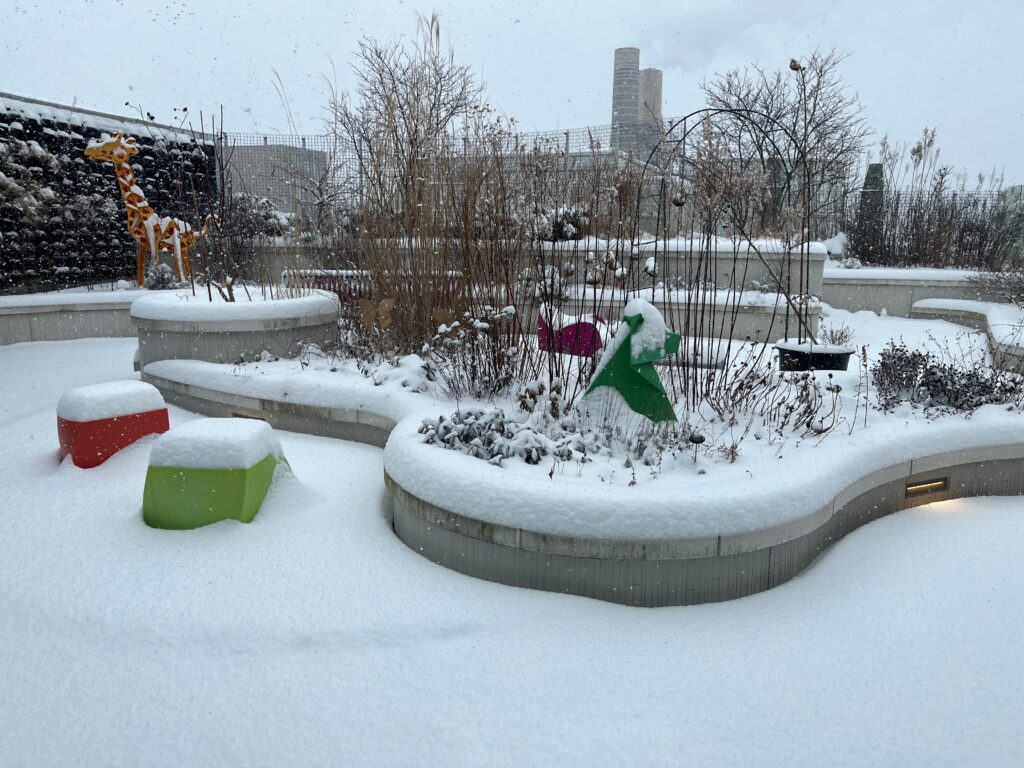
When I meet a patient and their caregivers for the first time, stillness plays an important role in my initial assessment. I work at University Hospitals’ Rainbow Babies & Children’s Hospital where we have a healing garden with an indoor lounge and horticultural therapy suite on the rooftop. Patients and caregivers can come to the rooftop with the assistance of staff, and many of the horticultural therapy inventions I provide are in an open drop-in format. Occasionally members of the care team may give me a heads up before they arrive, about specific conditions and considerations to know about patients so I can adapt and modify interventions as needed. But often, I know very little about a patient and family when they arrive at the rooftop to work with me. Rather than quickly suggesting an activity to jump into with them, I like to ask them a little about themselves while being still and observing what they seem naturally drawn to with their eyes and movement. As a practitioner, my ability to be still in these moments is an important first step in supporting Attention Restoration for patients. Within the hospitalized environment, patients are staying in sterile, man-made environments, regularly being asked to direct their attention in various ways to cope. That can be exhausting for the patient and contribute to other mental health stresses. It also can make it difficult to provide therapies if a patient is exhausted, or even worse, intimidate the patient by asking them to undertake further therapy requiring more attention when they don’t feel they have the energy to take on a new challenge. One of the reasons why horticultural therapy is so therapeutic in the hospitalized environment is because it provides access to the natural world in a gentle way that enables patients to ground and regulate their nervous systems at their own pace.
The Patient-Centered Horticultural Therapist
That said, the pace at which people need stillness varies. Some need a quick moment, a couple breaths of stillness inhaling the fragrance of mint or Cuban oregano, while others need to simply sit with their hands in a pile of soil for several minutes. What’s most important is as the horticultural therapist, I must be patient-centered, and able to hold that space for stillness so the patient can restore their attention with ease and be ready to move to the next step in the timing it requires.
In this way, the healing and therapeutic benefits can come more from my inaction, rather than my directing of action. This is perhaps where or why it can be challenging for practitioners to implement, because on the surface being still during a horticultural therapy session can look like you “aren’t doing anything.” However, it is like watching a seed germinate, in that you may not even see that seed buried an inch under the dark, moist soil, and yet in that stillness is where the greatest growth is catalyzed.
It feels important to note that the inaction inherent in the practice of stillness can be challenged as therapeutic, particularly if horticultural therapy services are provided in an environment where there is an emphasis, prioritization, and valuing of quantitative and product-oriented outcomes. In the medical therapeutic context, where there can be time constraints for medical staff, and pressures of insurance and documentation that chart concrete activities, there can be even more pressure to “keep it moving” and practical. This is all to say that especially within this context, it is even more crucial to provide moments of stillness for patients to be able to have choice and freedom of movement and expression.
Stillness can also cause discomfort for caregivers and other practitioners. For example, I have had a parent feel awkward when they don’t understand why their toddler is suddenly so fascinated by the tiny leaves of a thyme plant, and why they are just sitting with a stem in their hands and showing me tiny thyme leaves for almost 10 minutes. It was understandable that the parent was confused, because that stillness was so unlike many other elements of their toddler’s play, and parents can already feel pressured by diagnostic assessments, that they want their child to seem “normal” and “appropriate.” Furthermore, caregivers can sometimes want to rush their children along to seem “more engaged” by “doing something” that affirms more of an “appropriate” or “normal” status. Being able to hold stillness and join the patient in the wonder can be a way to assist a caregiver in seeing the value of the stillness. Practicing stillness with a patient will look different, depending on the patient and age-appropriateness. With a toddler whose caregivers feel uncomfortable with their unique stillness when encountered with plants, I may say “wow, isn’t that amazing? So much to look at, so much to take in” to model for caregivers the benefit of being still and present with the natural world.
Horticultural therapy inventions can be as simple as sitting with a plant, observing the pattern and texture of its leaves, and acknowledging the reciprocal relationship between plants and humans simply through our breath. There is stillness inherent in all of it.
Our tears can evaporate, becomes clouds, rain down on the earth, and become the water we drink and give to our plants, so that molecules may evaporate and continue the circular movement. Water is always moving, it is always changing, and transforming, but it also has moments of stillness.
Stillness with Self
Finally, as a tip for practice within the horticultural therapy profession, being still is also what helps me to renew and restore my spirit personally, and reconnect with myself before and after providing services for clients. Most frequently, it is the stillness I experience watching pollinators frequent native blossoms. I especially love slumbering bumble bees, and how they hug onto Maypop and Sunflower, their whole fuzzy bodies spread, still amongst the rain drops settled within the petals. In the winter, I find stillness in watching snowflakes dissolve into snow piles or staring into the mysterious fog cloaking the clock tower viewable from the rooftop garden. It can be like that little moment of pause that happens after an exhale. Sometimes it is brief, sometimes it is an extended moment, but it is stillness.
So whether you find yourself facing the season of winter or summer, there are moments in the day where the sun hangs with stillness in the sky. May remembering stillness be a helpful tip for your practice as you care for your plants, your patients, and yourself.
Diana Sette, is an HTI graduate and horticultural therapist at University Hospitals’ Rainbow Babies & Children’s Hospital in Cleveland, OH
HTI Kudos
Congratulations to three HTI graduates for their recent successes.
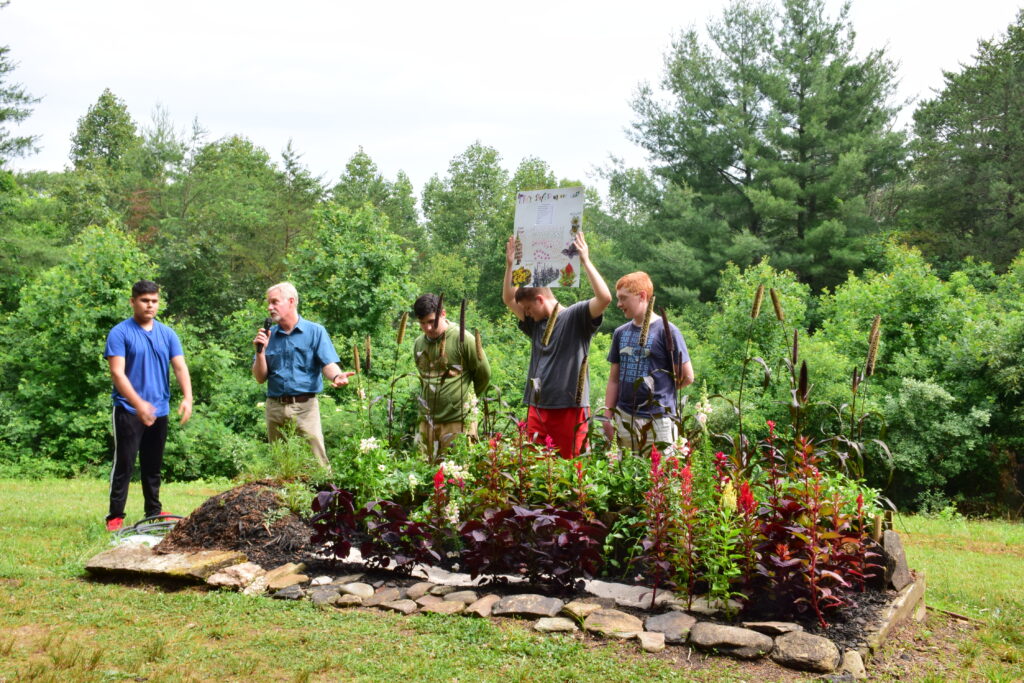
John Murphy, HTR, recently received the Rhea McCandliss Professional Service award from the American Horticultural Therapy Association for his work at Bullington Gardens developing and leading horticultural therapy programs for students with special needs. The BOOST program teaches basic job skills to students with learning disabilities as they work on the grounds at Bullington and has been providing HT continuously for over 20 years. Other populations he has worked with are adults recovering from addiction, seniors, and teens with eating disorders. John also planned (and did much of the construction) of the Therapy Garden at Bullington (which is now named for him). He has been actively leading the Carolinas Horticultural Therapy Network which became a nonprofit last year and continues to serve on the Board of Directors.
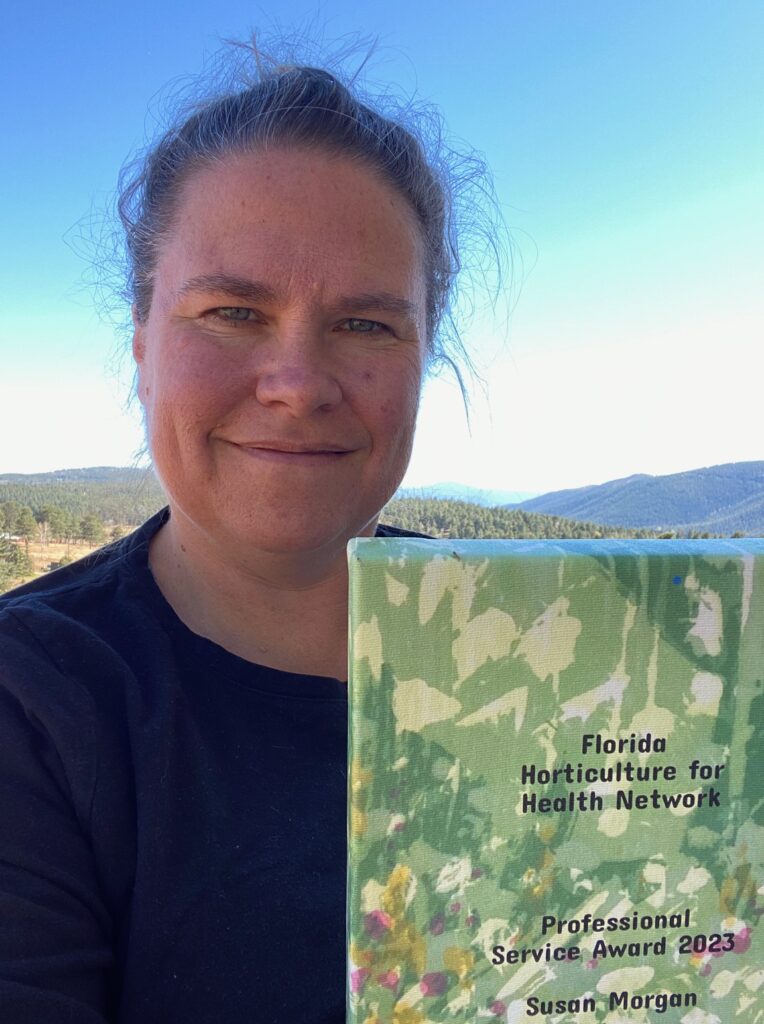
Susan Morgan received the 2023 Florida Horticulture for Health Network Professional Service Award. She is a 2010 HTI graduate and contributing author to The Profession and Practice of Horticultural Therapy, editors R.L. Haller, K.L. Kennedy, and C.L. Capra (2019)
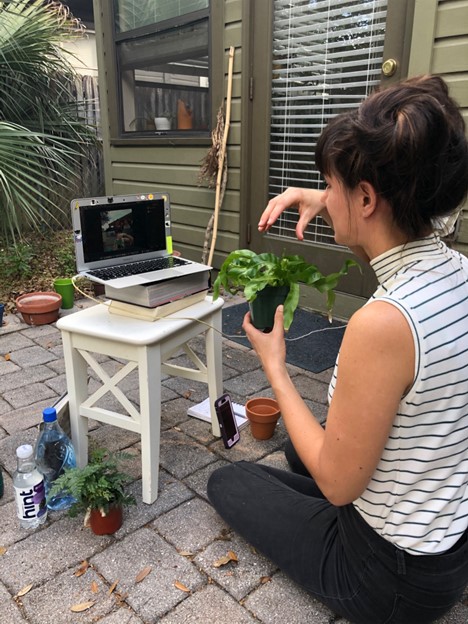
Joanna Brown who recently co-authored an article in the recent AHTA Journal of Therapeutic Horticulture (33.1-2023) “Horticultural Therapy Health Interventions with Female Survivors of Human Trafficking: Program Models” Other co-authors include: Z. Polackova, L. Fleming and H. Kelejian. Brown holds a certificate in horticultural therapy from the Horticultural Therapy Institute in Denver Colorado and an interdisciplinary BA in humanities, social sciences, and environmental studies from the University of Central Florida. She is the owner of Restorative Horticultural Therapy contracting and consulting and the founder of Horticulture for Healing, a non-profit which advocates for horticultural therapy and therapeutic horticulture in less privileged communities. She partners with residential centers for behavioral health and addiction, an anti-human trafficking organization, and the University of California, Irvine. Currently, she is designing her second therapeutic horticulture program for Pace for Girls located in Immokalee FL. She lives in Miami, Florida and self publishes a quarterly zine titled: People & Plant Care: A zine for anyone in recovery, healing, displacement, and transition.