
Program Manager, HT Institute
2026 Winter Newsletter
Horticultural Therapy is making an impact on people’s lives.
Read more about how it’s happening.
HTI Director’s Note: More Nuggets from the Latest HT Textbook
By Rebecca Haller, HTM

Hi Readers,
There are many learning opportunities in Horticultural Therapy Methods: Connecting People and Plants in Health Care, Human Services, and Therapeutic Programs Third Edition – released in April 2025. From that textbook let’s focus on the subject of ‘activity selection’ for this article.
Selecting and designing horticulture activities is a core skill for horticultural therapists. Gardening connects people and plants and is a key catalyst for positive human development, helping to advance individuals to goal attainment. In effective programs the therapist designs strategically and considers many factors when choosing horticulture activities to offer program participants. Here are a few of those considerations.
Looking first at what is happening currently in the garden is very effective to provide meaning and motivation for the gardening activity. What is the season of growth? What are the present and future needs of the garden itself? Is it time for cultivation, weeding, sowing, watering, clearing, tending indoor plants? By focusing on the garden, the participant can be a care-giver – a role that is frequently missing in the lives of those served in horticultural therapy. They can take ‘ownership’ and feel needed as well as improve self-efficacy, self-worth, and a sense of purpose. It also offers endless opportunities for wonder and surprise as the garden constantly changes. Thus, I am a strong advocate for keeping it ‘real’ whenever possible.
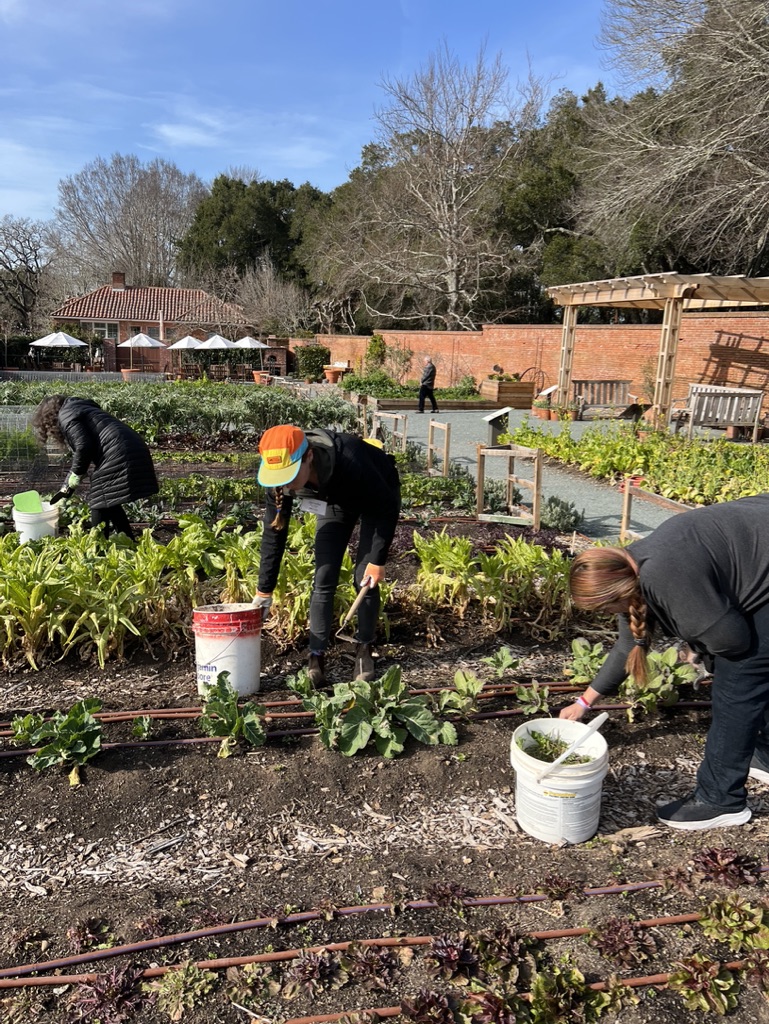
Obviously, another important consideration is to match the activity to treatment plans and participant needs. What is the setting? What big-picture treatment outcomes are sought? What individual needs, issues, and strengths are present? Are there safety concerns that would limit engagement in some activities? If so, what supports or adaptations could make it possible to include those pursuits? Oftentimes any given activity can be skillfully designed to meet a variety of needs – horticulture is truly flexible when the therapist has a ‘can-do’ attitude and a repertoire of skills and techniques!
How does the time of the gardening year influence activity selection? This may seem obvious but remember that we often work with folks who have been disconnected from nature or are disoriented due to illness, injury or circumstances. Gardening is a great way to reconnect, reorient, and bring awareness to seasons, weather, and time of day, as well as to cultivate mindfulness. Choosing gardening activities that fit the time of year and considering the past and future succession of projects brings relevance to the undertakings.
Therapeutic Experiences
It is sometimes useful to create a gift planting or ‘make-and-take’ project as an activity that grounds a session’s topic. When these projects incorporate a living plant, the care of the plant provides opportunity for therapeutic experiences beyond the session itself. There are many resources to get ideas for these types of projects. Be sure they have a growing component. Remember that a project has merit, but often the simplicity (and complexity) of outdoor and indoor gardening is the magic essence that forges the most vital and positive human growth.
Additionally, activities don’t need to be focused only on those task that are commonly considered the ‘fun’ part of gardening – such as growing seedlings, planting a container, harvesting vegetables, etc. Including all the steps to horticultural success offers a more authentic experience and a sense of worth and responsibility to the participants. Offer them this fuller involvement whenever possible.
Horticultural therapy is uniquely positioned to offer hands-on experiences that connect the client, therapist, and plants to stimulate positive change and development.
Note that “Program Planning and Activity Design’ is a core domain to be included in the competency exam for the Horticultural Therapist – Board Certified (HT-BC) credential with the American Horticultural Therapy Association expected to be launched this fall.
Happy Learning, Rebecca
Fall Classes now Available for Enrollment
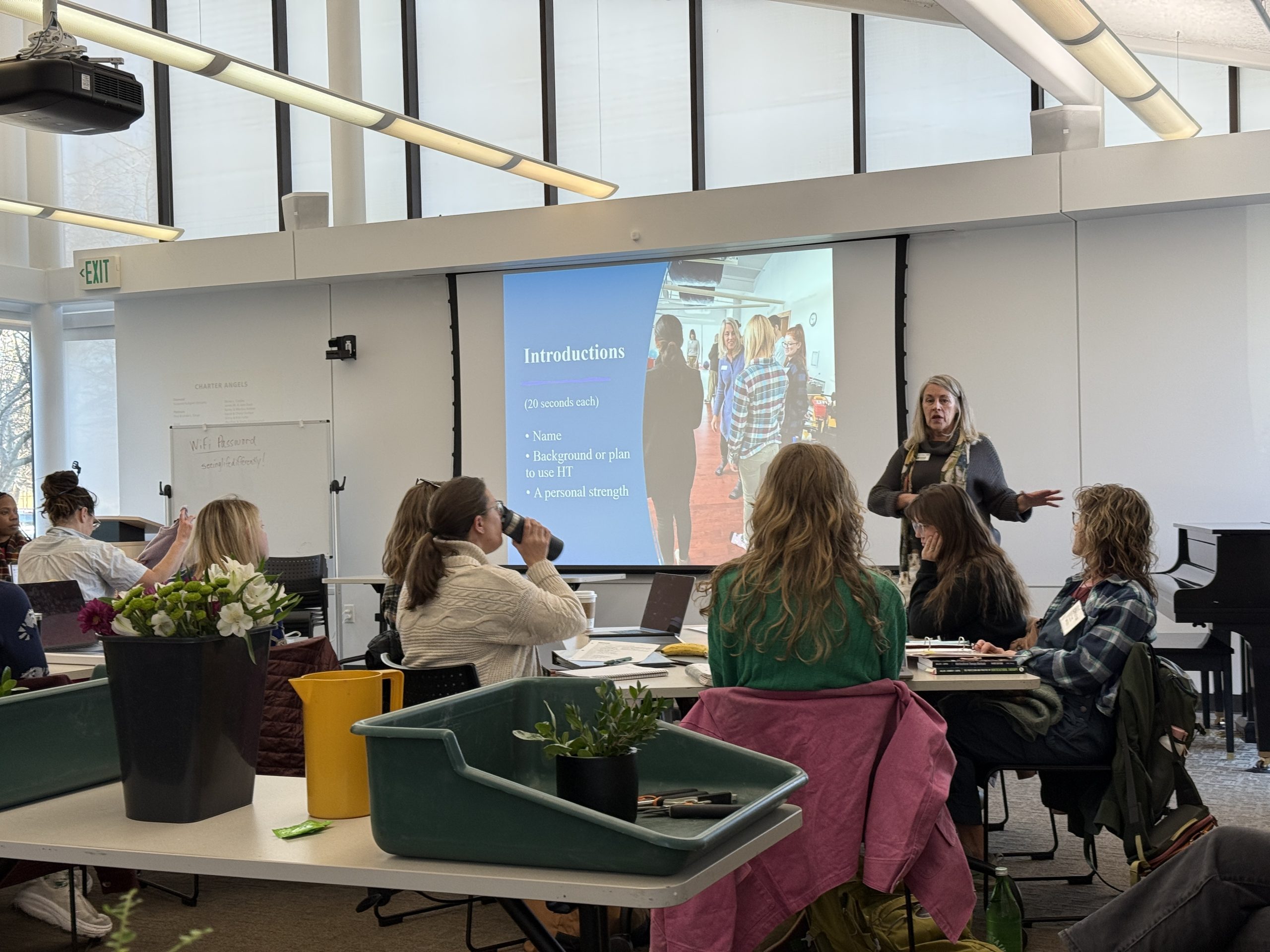
The next cohort for the HT certificate program are now available for enrollment. Learn how to combine a passion for gardening and helping people through the innovative field of horticultural therapy. At the non-profit Horticultural Therapy Institute, our mission is to provide education and training in horticultural therapy to those new to, or experienced with, the practice of using gardening and plants to improve the lives of others. The remaining three classes in the HT Certificate program in 2027 will be announced by spring.
The HT Institute has provided education in the field for over 20 years and is a leader in HT education. The director, Rebecca Haller, HTM is also one of the authors and editors of both major textbooks in horticultural therapy. The format of classes meets students’ unique learning style and are offered both face-to-face and online (synchronous). All sections are the same class, simply choose one that fits your schedule. The Fundamentals of HT class cost is $950 or $760 for full-time college students. www.htinstitute.org or call 303-388-0500.
Fundamentals of HT sec. I: Oct. 21-24, 2026 (Denver, CO) Deadline: Sept. 21
Fundamentals of HT sec. II: Nov. 3-6, 2026 (online, mountain standard time) Deadline Oct. 3
Fundamentals of HT sec. III: Nov. 17-20, 2026 (online, mountain standard time) Deadline Oct. 17
Program Profile:
Connecting with the Beauty and Tranquility of Nature
By Anna Wiens
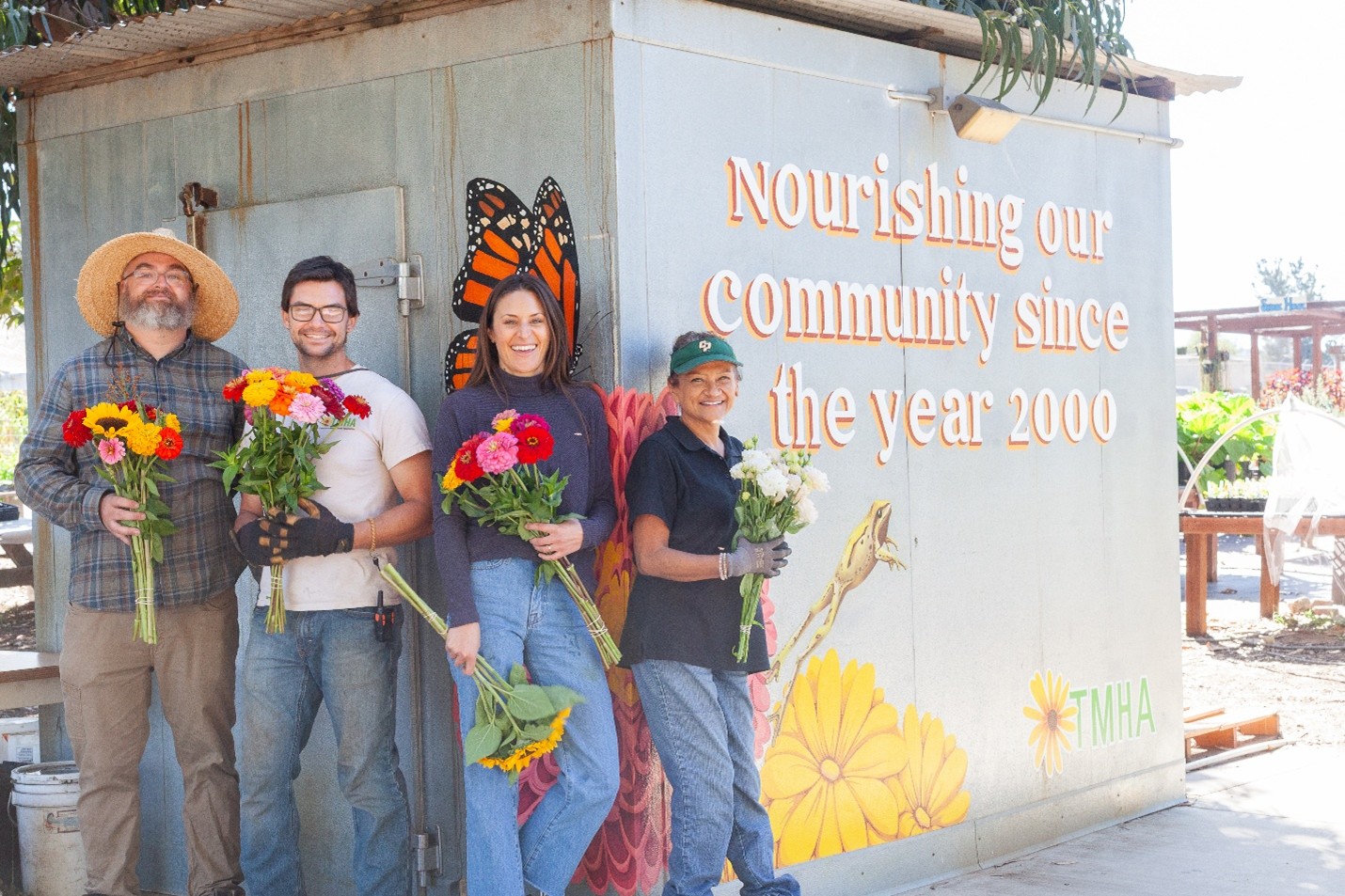
In the cool of the morning, Alejandra and I sift through the rows of dahlias, zinnias and lisianthus, looking for stems that are mature and ready to be harvested. Bumblebees and honeybees zip past us – their hum droning in the air. Territorial hummingbirds chatter loudly in the nearby trees and dip down into the flowers, taking turns having breakfast. The farm around us is buzzing with people as well, all busy at work. A small group weeds a young lettuce crop, laughing and sharing stories as they make their way down the row. George harvests carrots for the farm stand, focused and discerning as he decides where to place his digging fork and how many carrots to put into each bundle. Linda washes produce to prepare it for resting in the cooler, remembering which crops wilt the fastest and prioritizing which things need to be washed and stored first. Amid the morning’s quiet bustle, I ask Alejandra what she likes about working here. Her response echoes what so many of us experience as we connect with the beauty and tranquility of nature and engage in activities that fill us with purpose and life. “At the farm, I feel peace. Everywhere else, I feel this gnawing anxiety – in the car, at home, while I am out. But not here. I love it here.”
Transitional Employment at Growing Grounds Farm
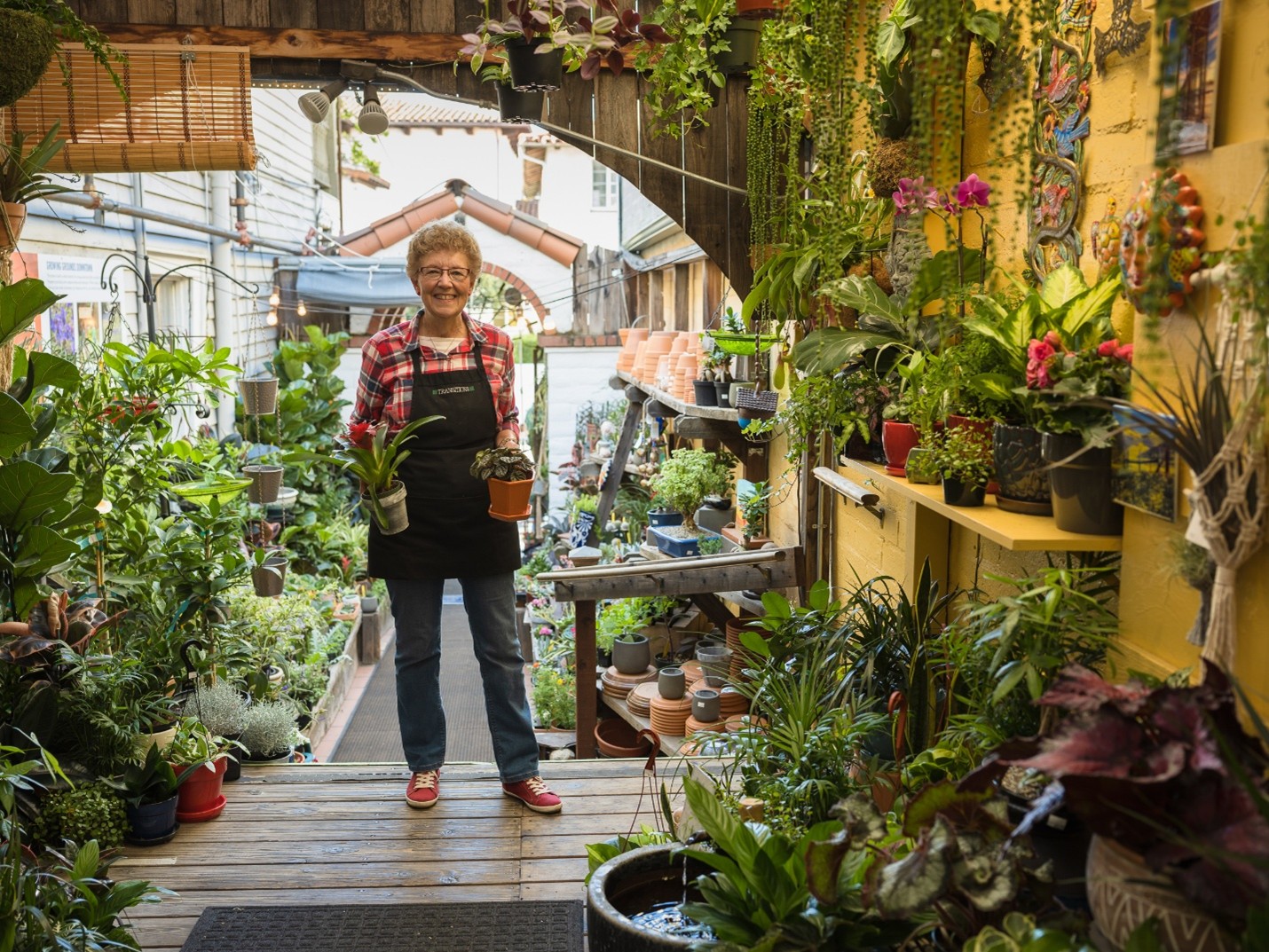
Alejandra and her coworkers are transitional employees of the Growing Grounds Farm located in Santa Maria, CA. She works a similar schedule to her colleagues, coming in to work for a three-hour shift once a week to start. As she gets settled into the program and the staff get to know her strengths and interests, she has gotten plugged into and trained to harvest our flowers and make flower bouquets for sale at our farm stand. And she is really good at it! All her bouquets sell and customers share praise for her creative designs. I can see Alejandra’s eyes sparkle with pride at the news.
The farm serves adults with persistent mental illness such as schizophrenia, bipolar disorder, anxiety disorder, PTSD or major depression, providing transitional vocational job training through employment and therapeutic horticulture. Referrals to the farm come from County Behavioral Health clinics, County Drug and Alcohol, County Probation, County Behavioral Health Treatment Court, veteran’s services and homeless services. Our purpose is to create an empowering and supportive environment for our participants to gain the skills and confidence needed to move into competitive employment in the community.
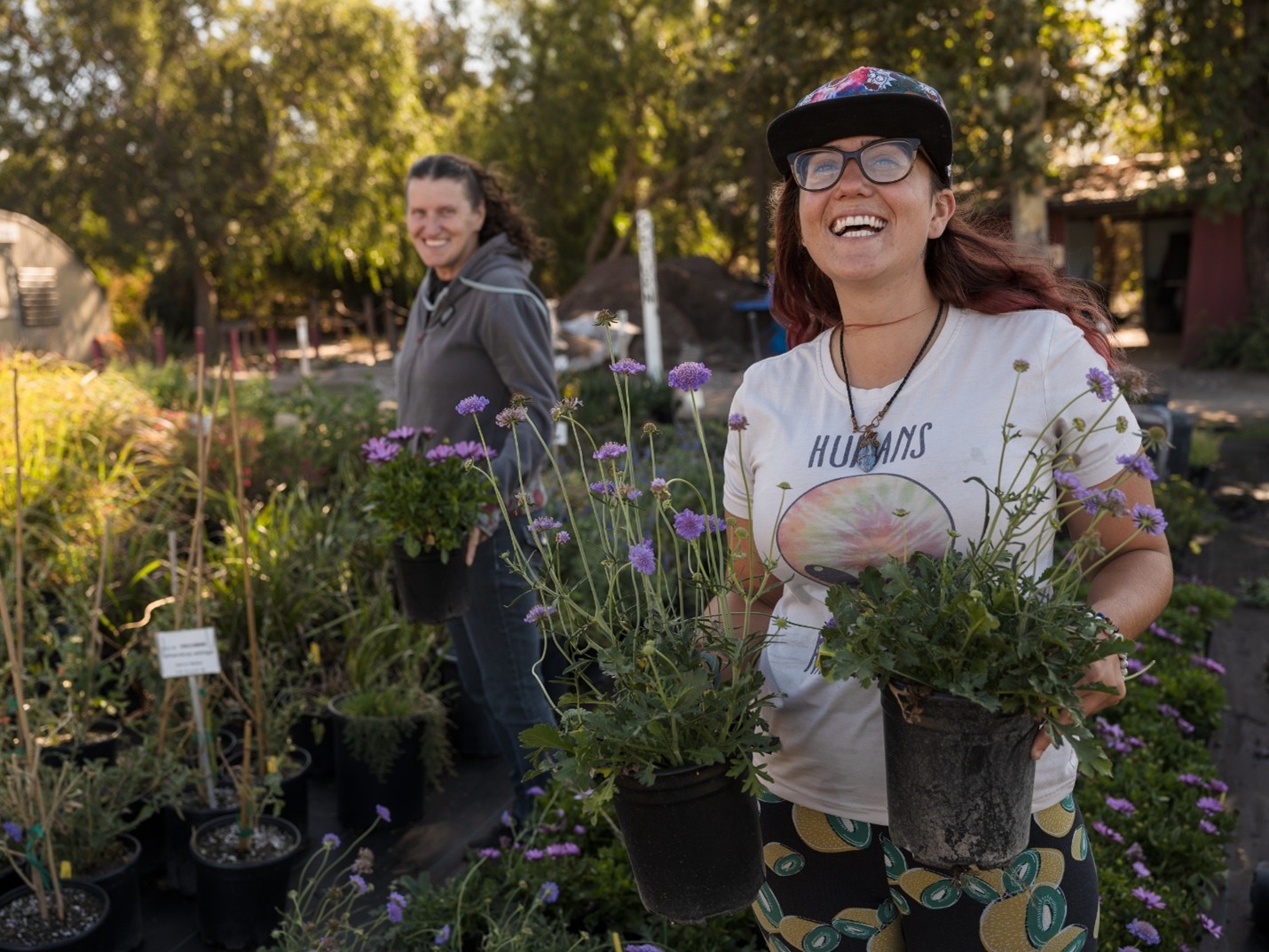
“I cannot think of any other employer that would look at me and say, ‘So, you haven’t worked in 18 years, and have lived experience with mental illness… when can you start?’” That was a testimonial from a transitional employee ten years ago, and it remains just as true today. Many of our employees have never had a job or have been unemployed for years due to their mental health. Yet the purposeful activity that work provides is one of the hallmarks of a fulfilling life. According to the California Association of Social Rehabilitation Agencies (CASRA) “between 85 and 95% of persons with a serious mental illness are unemployed at any one point in time– a staggering figure for a largely working age population. This rate of unemployment dwarfs’ rates among other disability groups and is one that has not changed substantially for a generation.” Individuals frequently are stunted in their career development by the life-disrupting influence of the onset of mental health challenges. These challenges do not only affect the length of their resume, but also all the skills and growth associated with having and maintaining a job. Additionally, we know that mental illness is often a socially isolating disease. Taken all together, competitive community employment can pose too high a hurdle for this population to make the leap. A transitional training environment is needed for people to gain the skills and confidence to overcome these barriers.
Therapeutic Horticulture Making a Difference
The Growing Grounds Farm is one of three separate therapeutic horticulture programs making up the Growing Grounds Enterprises (GGE) on California’s Central Coast, which also includes our Growing Grounds Nursery and Growing Grounds Downtown. Together, these programs have provided supportive vocational training and employment opportunities to adults living with mental illness for the past 40 plus years, serving well over four thousand individuals since being established in 1984.
Growing Grounds Nursery, a wholesale landscape nursery in San Luis Obispo, was our first vocational program and proved to be such a success that our parent organization, Transitions-Mental Health Association (TMHA) established a second Farm in Santa Maria in 2000. In 2005, we added Growing Grounds Downtown, a retail outlet in the commercial section of San Luis Obispo, to provide our transitional employees with a retail sales work experience. These three social enterprises work in concert with our Supported Employment Programs to create structured, multi-step, on-the-job training that provides employment to nearly 140 individuals each year. These unique programs offer paid employment, vocational training, and therapeutic horticulture to participants. As noted in an article from the 2020 edition of Epidemiology and Psychiatric Sciences, “Employment improves the mental health and wellbeing of people with serious mental disorders, including improved self-esteem, symptom control, quality of life, social relationships and community integration, without harmful side effects. No other mental health intervention consistently shows these important benefits” (Drake et al., 2020).
Recovery through Employment Changes Lives

Thankfully, this and other research confirm what our participants have shared with us for years. Like Jessie, who struggled through decades of dependency and trauma, crippling her ability to continue to work in her career. She came to the farm to heal, to start again; to start small, like a seed. She shared, “Every day at work on the farm I felt a little less broken…” She grew and grew. A new leaf here, a new leaf there. Over time, she developed a strong stalk, established robust roots and enough resilience to withstand being transplanted into gainful full-time employment in the community. “’Recovery through employment is real,’ she said. ‘But recovery through the Growing Grounds Farm truly changed my life! I treasure that gift.’
We treasure the gift of coming alongside each person that walks through our gates, of nurturing their growth while they are with us and supporting them as they invest in their recovery and take steps that challenge them. And we celebrate with them as they outgrow us and go out into the community.
Some of our recent surveys and statistics have shown:
- 27% graduated from the program to find jobs in the greater community
- 89% of Growing Grounds clients experienced zero visits to the Psychiatric Health Facility (PHF) in 2023-24
- 0% recidivism among participants referred to by SLO Behavioral Health Court
- 100% of clients surveyed have decreased use of crisis services
- 91% of clients surveyed increased their housing stability
- 89% of clients surveyed agreed that they are better able to manage their wellness and recovery
- 83% of clients surveyed agreed they are more hopeful about the future and feel more purpose and meaning in life
To learn more about our programs, please visit us online at www.t-mha.org/work-programs.php
Note: Names have been changed to protect participant identities.
Anna Wiens is the program manager at GGE and a recent HTI graduate.
Citations:
Drake, R. E., & Wallach, M. A. (2020). Employment is a critical mental health intervention. Epidemiology and psychiatric sciences, 29, e178. https://doi.org/10.1017/S2045796020000906
Net Business Consulting & Solutions, LLC. (n.d.). A diagnosis is not a destiny. California Association of Social Rehabilitation Agencies. https://casra.org/advocacy-social-rehabilitation-agency.html?id=136
Tips for Practice:
Applying HT When Working with Populations Living with Physical Disabilities
By Christy Righter
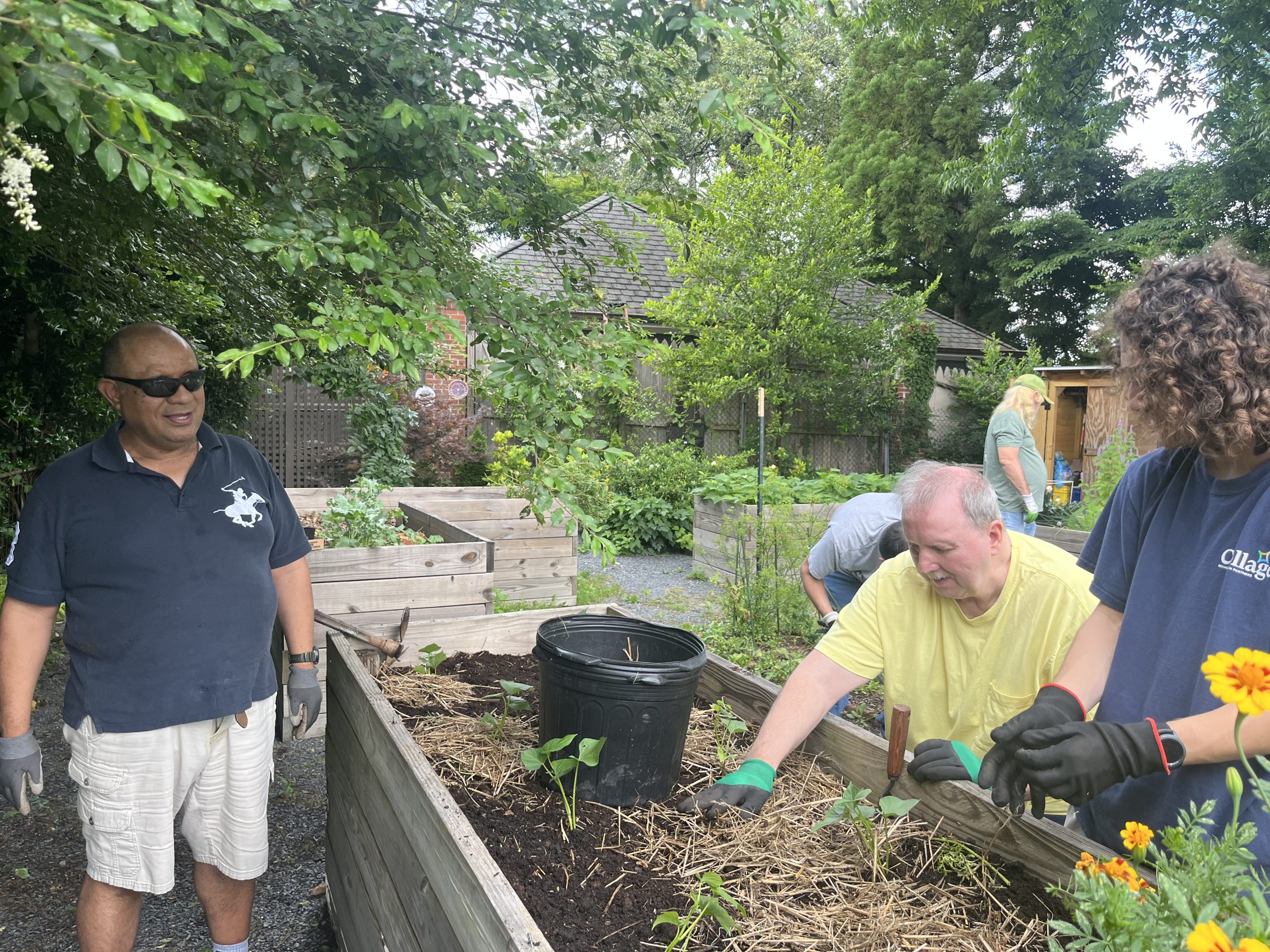
Trellis Horticultural Therapy Alliance, located in the Atlanta, Georgia area, uses the power of gardening and nature to enrich the lives of people living with disabilities by providing purpose, fostering independence, and creating community. Since 2018, Trellis has operated under a community-based wellness model of therapeutic horticulture, serving adults aged 18 and older living with various neuromuscular illnesses or injuries, including spinal cord injury, traumatic brain injury, MS, stroke, and mental illness.
Over the years, Trellis has identified several “tools of practice” to aid this population, ranging from physical tools that provide accessibility to social strategies that promote community. This article focuses on our work with individuals living with neuromuscular disabilities who utilize wheelchairs, walkers, or canes for mobility.
Important considerations for session planning:
Individual Pre-Assessment: The diversity of abilities and needs of the populations Trellis serves will vary widely. Conducting a pre-assessment of individual participants is essential for planning purposeful, effective and safe sessions. Environmental Sensitivity: Weather significantly impacts participants living with neuromuscular disabilities. They are often more sensitive to extreme temperatures or humidity. This must always be taken into consideration when session planning. Flexibility and “Plan-B” indoor options are key! Transportation Logistics: Many participants depend on accessible vehicles, family member/caregivers, or public transit to travel to and from sessions. Ensure your site has sufficient space for vehicle drop-offs and adequate ADA-compliant parking spaces. Accessible Surfaces: Indoors, solid floors are preferable to carpet, which can be difficult for manual wheelchairs to navigate. Outdoors, surfaces must be level, free of trip hazards, and firm enough for power chairs. Ensure all paths and hallways provide a minimum of 36 inches of clearance and include ramps or elevators where levels change.
Providing Purpose
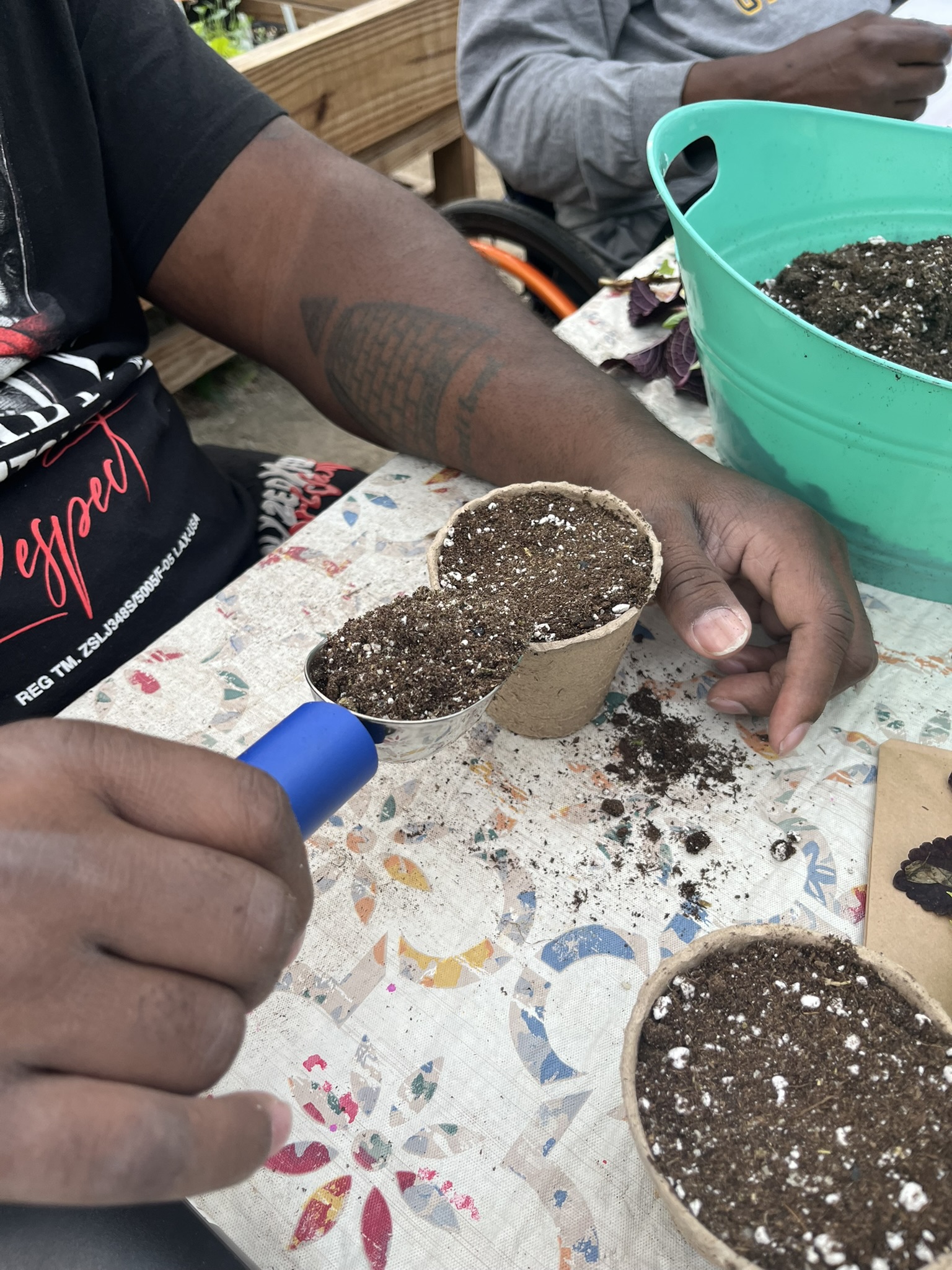
People living with neuromuscular disabilities may experience higher rates of depression, isolation and loneliness, (Wilson & Christensen, 2011). Biophilia is “our inherent affinity for nature and our need to be surrounded by it to achieve physical and mental well-being”, (Willis, 191). This affinity for nature is an excellent resource to draw people to therapy with the goal of reducing these sufferings and enhancing their physical and mental well-being.
L., a member in our community had no prior knowledge of gardening prior to his spinal cord injury. While recovering, he was introduced to houseplants. He then started coming to Trellis sessions. Three years later, he calls himself the “Plant Daddy” and has a house full of plants that he cares for. He loves coming to our regular sessions and is a core member. He is also a vocal advocate for horticultural therapy. Gardening and the general care of plants and our surrounding nature provides meaningful purpose to anyone engaged in these activities. Horticultural therapy and therapeutic horticulture, therefore, is ideal medium for enhancing well-being in this population.
Fostering Independence
When working with people living with physical disabilities, consider these best practices:
- “The Wait Rule”: Wait before offering assistance. Participants are often the best experts on their own problem solving. Assist as needed, beginning with verbal ques, advancing to physical assists as appropriate. Work as a team with your participants. Their confidence will boost each new skill they acquire. One member of our community, A., worked as a mechanic prior to his injury. His ingenuity, creativity and drive to accomplish tasks is inspiring! I always wait a moment to watch what he comes up with.
- Proactive safety:Identify obstacles or sharp objects that may not be easily sensed by someone with sensory deficits or motor issues. Plan your space accordingly.
- Intentionality: Provide adaptive tools ahead of time to allow individuals to accomplish tasks with minimal assistance. Plan session activities that will optimize independence.
Adaptive Tools used at Trellis:
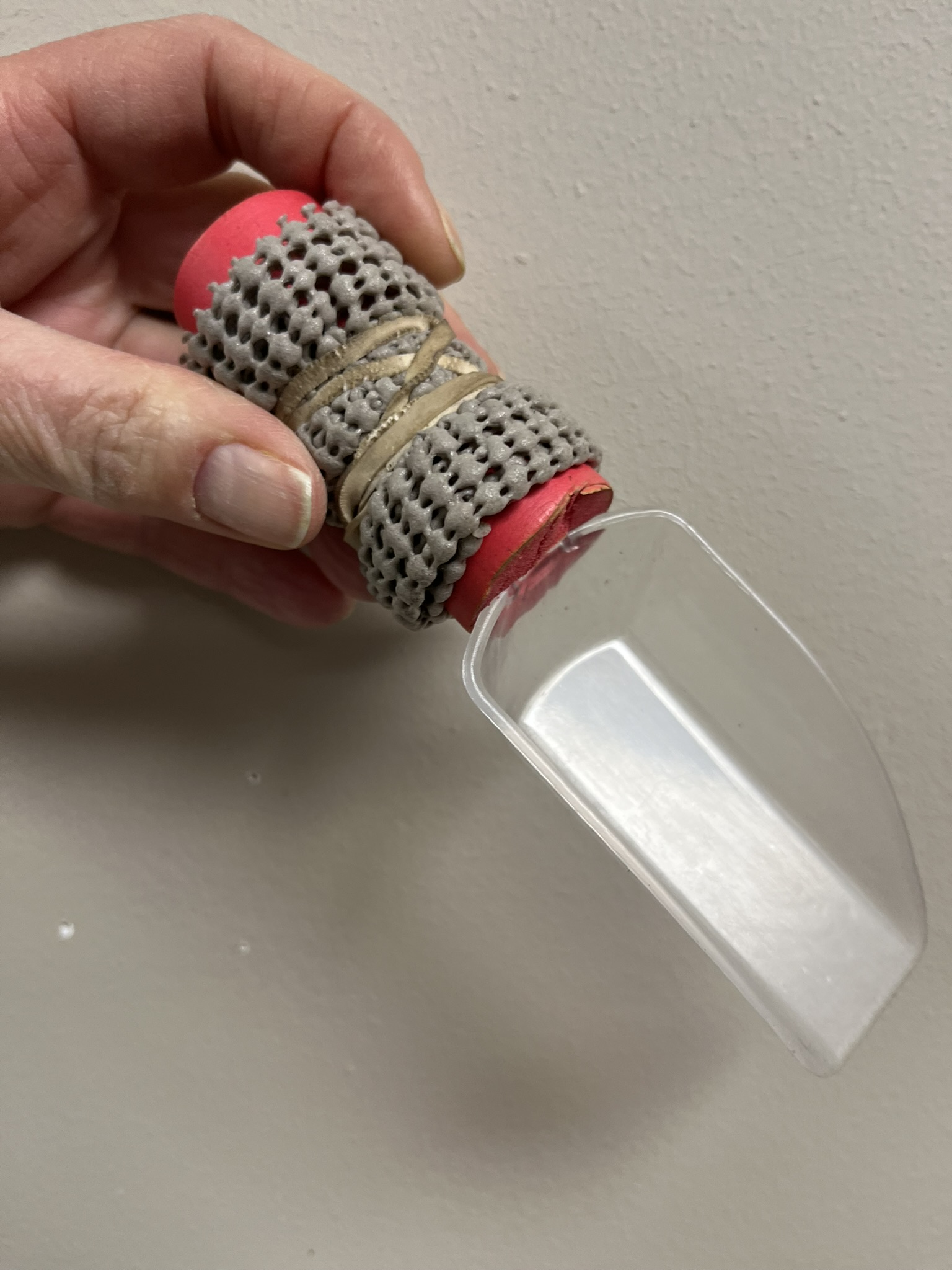
- Built-up grips: Helpful for adapting thin items like pencils, paintbrushes, or small tools, such as soil scoops.
- Billiards Cuff: Aids in utilizing tool handles or smaller handles with built-up grip added.
- Grasping Cuff: Aids in utilizing easy grip add-on handles.
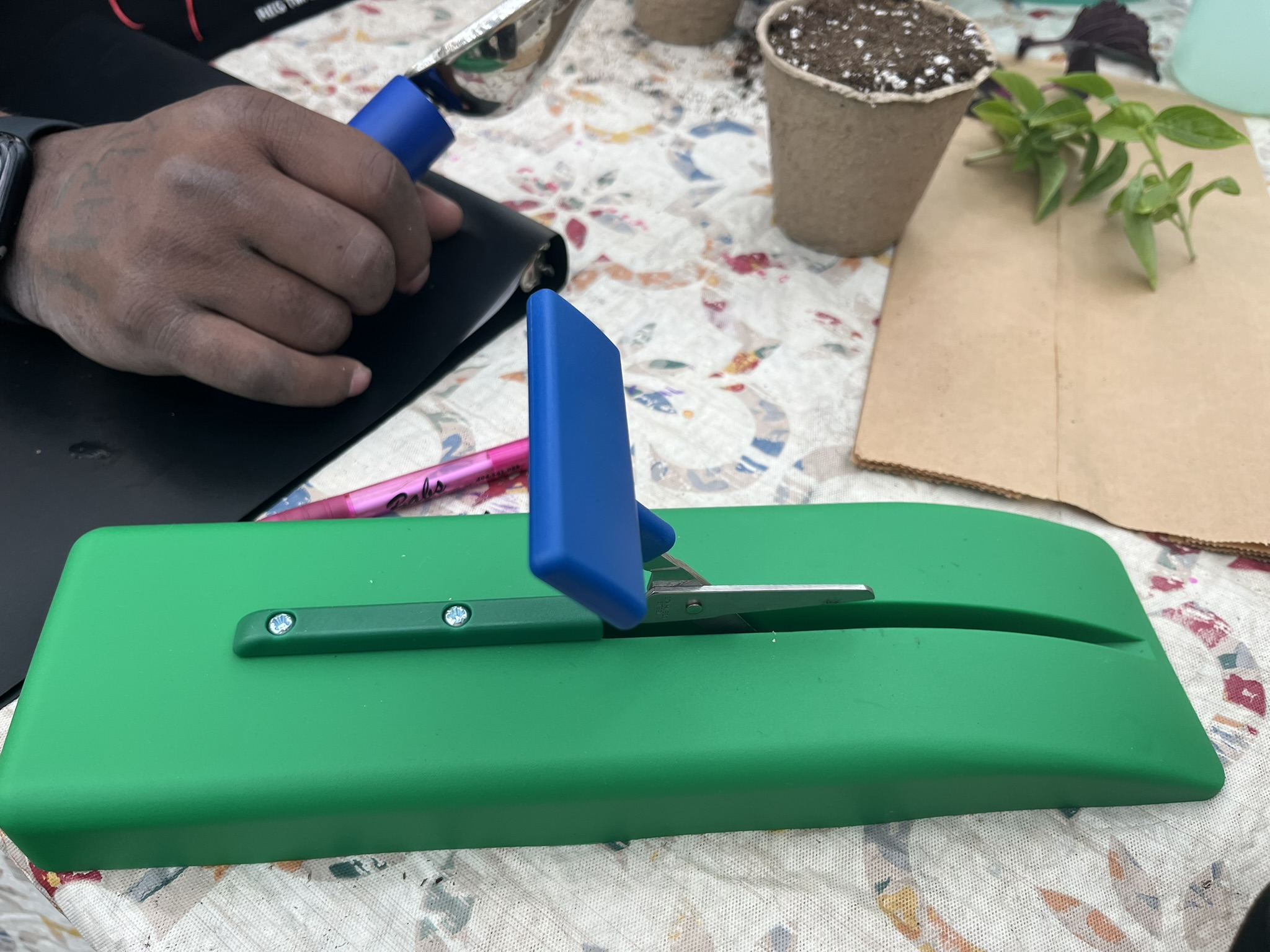
- Lightweight trowels and table-top scissors: Reduces strain for those with limited grip strength. The table-top scissors rely on pressing down with the palm that allows someone with fine motor impairment the opportunity to participate independently.
- Ergonomic garden tools: These also reduce strain and increase effectiveness for those with limited grip strength or mobility.
- Strategic raised beds: There are many sizes, heights, materials and configurations to choose from when selecting a raised garden bed. Ensure the bed and soil surface height are easy to reach, even from a seated position. The optimal bed width should be no larger than four feet to allow for access from both sides, with three feet width optimal for wheelchair users.
- Table risers: These removable blocks are commonly used for furniture and work greatly to increase the height of worktables as needed to allow power wheelchairs to easily slide under.
Creating Community
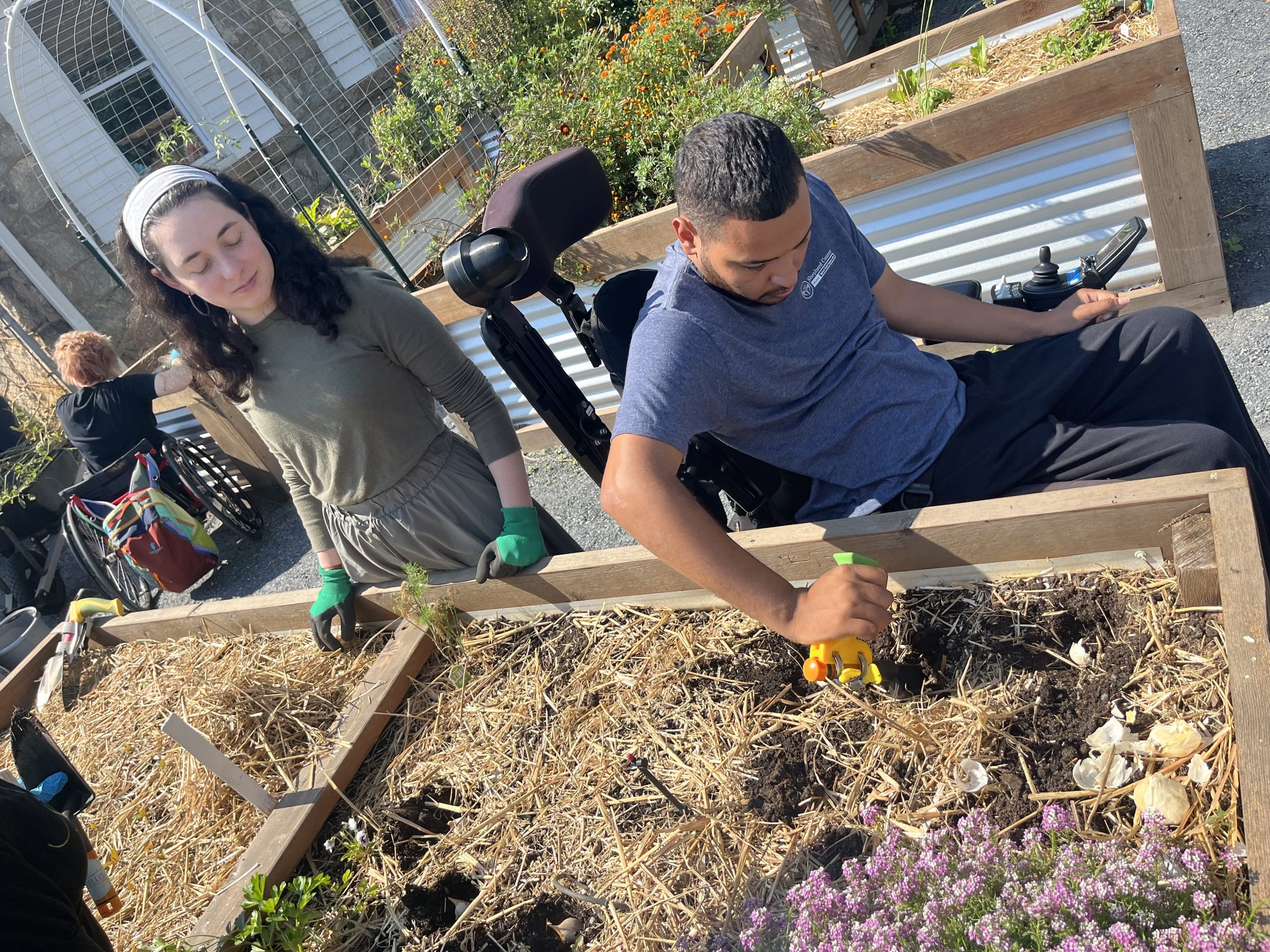
The Trellis community is composed of a wonderfully diverse group of individuals who gather in the context of horticulture. Some come with limited gardening knowledge or even little interest in horticulture, while others are horticultural experts with the desire to learn more in community and share their knowledge with others. Through time spent in our therapeutic horticulture sessions, both learning and love of horticulture are gained. Participants also benefit from connecting with others, which brings a sense of belonging that is critical to mental wellness. The following are tips to enhance your programming in the aspect of creating community.
- Normalize Disability: Be respectful of unique challenges while treating disability as a normal part of human experience.
- Staff Consistency: Ensure all volunteers and staff are trained in safety, respectful speech, and Person-First Language. Include training in proper use of tools to create an atmosphere that will be effective in accomplishing the goals of the therapeutic program.
- Resources: ADA is a great resource for people living with disabilities to understand their rights and for caregivers/providers to know and understand the standards for designing space. As mentioned above, transportation to and from sessions is key to participation. Check out your local public transit system for accessible transportation resources and share with your participants, ( Marta Mobility in Atlanta). Additionally, there may be funding for private transport to HT sessions through your local city or county.
- Share a Meal: At Trellis we often harvest from our garden, then cook and share the meals during sessions. This fosters conversation, community and trust.
- Shared Wisdom: Finally, leave time in sessions for group members to share life, experiences and resources with one another. They are often experts, and this time nurtures community and relationship building.
The field of therapeutic horticulture has much to offer those living with neuromuscular disabilities and illnesses. With appropriate space design, adaptive techniques and staff training, we can achieve goals of independence in gardening which can lead to increased purpose and a broader community of meaningful relationships.
References:
- Willis, Kathy. (2024). Good Nature: Why Seeing, Smelling, Hearing and Touching Plants is Good for Our Health. Pegasus Books.
- Wilson, J. F., Christensen, K. The Relationship between Gardening and Depression among Individuals with Disabilities. Journal of Therapeutic Horticulture, 21, No. 2 (2011), pp. 28-41
- U.S. Department of Justice. (n.d.). Americans with Disabilities Act. ADA.gov.
Christy Righter is an HTI graduate the program associate and volunteer coordinator at Trellis Horticultural Therapy Alliance.
HTI Kudos
New Opportunities for HTI Student
Congratulations to HTI graduate Eleanor Wroath who was recently hired as the lead practitioner at TWIGS Community Gardens in the UK. She will lead “gardening through grief” and “evergreen garden club” groups as part of the organizations general therapeutic horticulture for wellbeing and mental health umbrellas.
Community Service Award
Two HTI graduates’ (Anna Wiens and Keith Bartlett) horticultural therapy program Growing Grounds Enterprises in California are being awarded the John Walker Community Service Award by the American Horticultural Therapy Association. This award is given in recognition of the significant contributions of| Growing Grounds to the profession of horticultural therapy. We are so proud of our graduates making a difference in their communities.
HTI Students Presenting at International People Plant Conference in Japan
A group of HTI graduates’ abstract has been accepted for the International People Plant Conference in Japan this year! These include: Gayle Gratop, HTR from University of Arizona Extension, Alison Brennan from Montana State University Extension, Carmen Ketron, certificate in horticultural therapy, Urban Horticulture, Clemson University, Deb Wolf, THP from University of Tennessee Gardens, Danielle Stojan, HTR from University of Illinois Extension, and Sarah McCracken, certificate in HT, Horticulture/Natural Resource Specialist and Master Gardener Coordinator
Colorado State University Extension, Eagle County. Their focus will be current and potential roles of cooperative extension in providing horticultural therapy programs and advancing the profession and practice of HT.
In addition Erin Lovely, HTR, CTRS from Anchor Center for Blind Children, Denver and Mattie Cryer, HTR, LCSW, CBIS from Craig Hospital, Englewood, CO will present Assistive Technology as Supplement to the People-Plant Connection.
New HTI Blog Contributor
We are proud to welcome HTI graduate, Megan Goulden, THP. She is a master gardener, and founder of Seed and Sage, based in the California Bay Area. She specializes in therapeutic horticulture for seniors, facilitating restorative, plant-based activities for individuals at home and groups within care facilities. She joins a robust team of exprienced horticultural therapist sharing their knowledge monthly. Welcome aboard!