By: Daniela Silva-Rodriguez & Manuela de Szyszlo
Note: this blog was originally written in Spanish and can be viewed in its original form here.
New Methodology Brings Results
Since we started spreading the practice of horticultural therapy (HT) and therapeutic horticulture (TH) in Peru 12 years ago, we have been fortunate to work with a diversity of population groups, including: people with substance abuse in a private rehabilitation clinic; children survivors of burns; children with cancer; the elderly; people diagnosed with multiple sclerosis; institutionalized children and adolescents; people with mental disorders; children and adolescents with ASD (autism spectrum disorder) and children with developmental disorders; and the community in general.
Our exposure to all this diversity of people’s needs, abilities and levels of functioning has, over the years, inspired us to develop a technique we have called ECO-PSYQUE NEXUS (EPN) Methodology. We apply the EPN Method in all our interventions, and we’ll describe it in detail for this blog. Regardless of the collective we are working with, the EPN methodology has given us very good results.
The structure of the EPN Methodology is as follows:
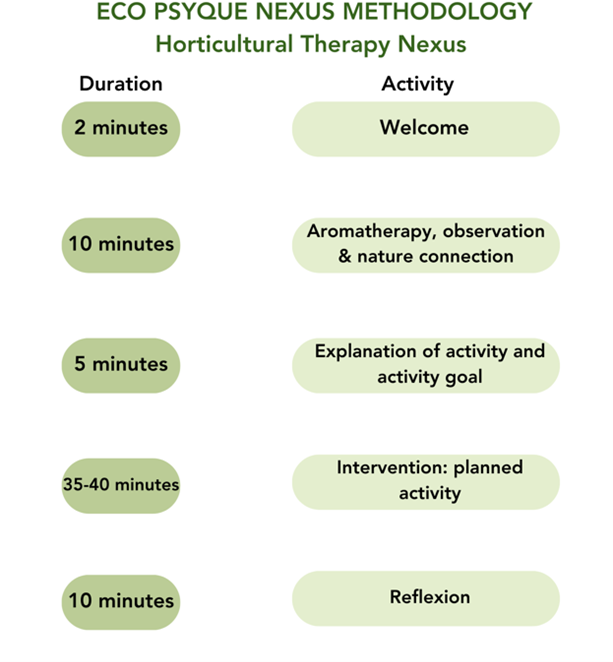
Description of the EPN Methodology:
STEP 1 – Welcome
Duration: 2 minutes
We like to start welcoming participants by introducing ourselves, giving our names, with a smile and words of welcome such as “we are very glad you are joining us today”.
If it is a new group, we write our names on stickers to familiarize ourselves with each other and promote social interaction.
STEP 2 – Connection with Nature
Duration: 10 minutes
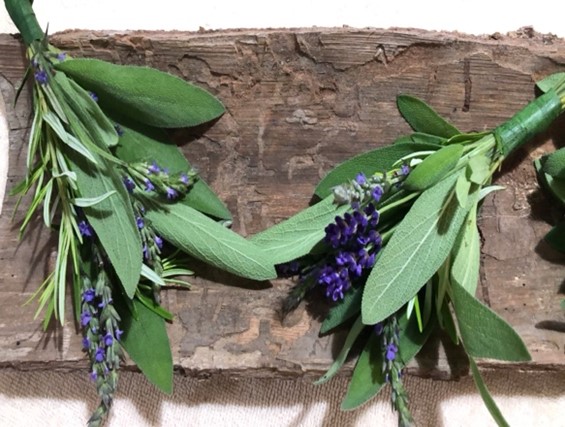
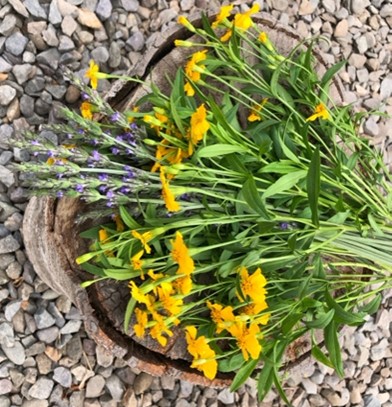
Through aromatherapy and conscious observation, we initiate the connection with nature. The use of aromatherapy is a fundamental step in bringing the participant’s attention to the present moment. For aromatherapy, we use especially lavender or lavender essential oil whose aroma has been scientifically proven to be calming.
The reason we initiate the intervention with aromatherapy is because fragrances can awaken memories, as well as influence the participant’s mood and/or behavior.
Another strategy we use in this step is to encourage “awe” by guiding participants to observe nature’s details, such as colors, textures, aromas, leaf veins, pistils, pollen, shapes, flavors, or adaptive mechanisms. An indispensable tool for this process is the availability of magnifying glasses for the participants.
Being aware of the world around us, of other living things and ecosystems, is critical to the ECO-PSYCHE connection and recognizing that we are part of something bigger, which also allows us to understand our place in the world. Through detailed observation of nature, we can bring the participant’s attention to the present moment, by practicing mindfulness.
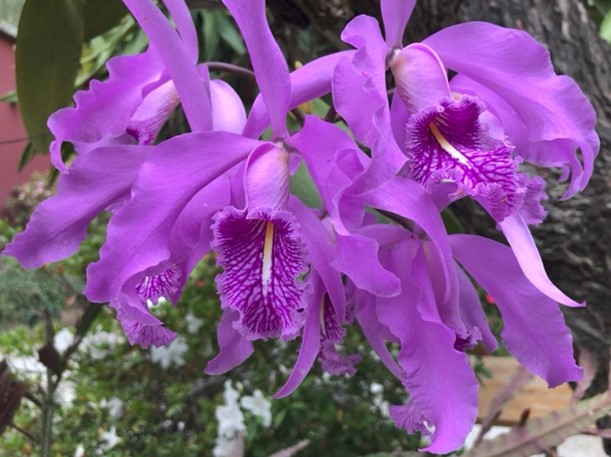
Observation – Cattleya sp. Orchid – Photo credit: Daniela Silva-Rodriguez
The goal of this stage is for participants to associate HT as a pleasurable experience. If participants feel good, they will be more willing to let their guard down and partake in the proposed activities. Through a regular interaction with the Eco-Psyche Nexus Methodology, participants will cultivate a bond with nature which will catalyze changes in the individual’s mood, behavior, functioning, or cognitive state. This technique is instrumental when working with children.
Practice example
We have a regular intervention at the Pérez Aranibar Foster Home for State guarded children. There we met a 10-year-old boy who presented episodes of emotional arousal in which he would break things, kick objects, or hit other children. He had a slight verbal impairment and a slight curvature in his spine, in the cervical area.
When he started attending the horticultural therapy sessions, he was rebellious, often not participating in the planned activity or answering “no” to all the questions we asked him. At the beginning of the sessions, we always started by asking the children in the group to cut a twig from their favorite aromatic herb. This child had identified lavender as his fragrance of choice. One day, we asked him to look for the answer “yes” in the garden. After 15 minutes of wandering around the garden, he came to us with a lavender twig in his hands and said, “I found the yes!” Finally, we got him to connect with the garden! On another occasion, he came to the garden very agitated, holding stones in his hands, and behind him came two psychologists who were chasing him and afraid that he would throw the stones at them. Seeing the situation, we approached the boy with a serene voice, and said: “Shall we go to see the lavender’s new flowers?” Immediately, the child dropped the stones, and we went to smell the lavender plant, to the great surprise of the psychologists.
The Physiology of Smell
The sense of smell is unique. Unlike the other senses, the nerves of the olfactory system connect directly to the limbic system structures of the brain, causing an odor to trigger both pleasant and unpleasant emotions, because scents are associated with specific memories.
Studies have also shown that a person’s emotional expression towards a specific scent can influence how each of us perceives the smell. For example: if my facial expression when smelling lavender flowers is one of pleasure, the other person expects that the scent is pleasant.
The smell is the only sense that the fetus has fully developed in the mother’s womb, and it is the most developed sense up to the age of 10, when the sense of vision takes over. Because “smell and emotion” are stored as a single memory, childhood is the period in which the basis for pleasant or unpleasant smells for the rest of life is created. Moreover, the sense of smell must be exercised, just as muscles are exercised: the more you smell a scent, the more intense it becomes (Dawn Goldworm, 2020).
STEP 3 – Explanation and Goal of Activity
Duration: 5 minutes
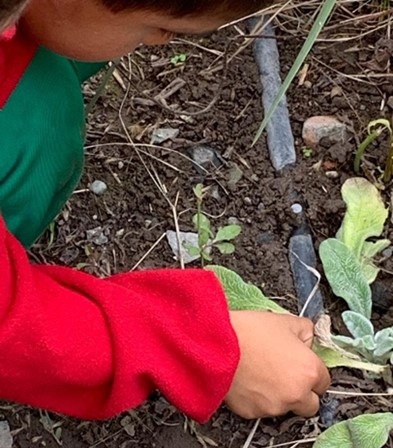
After the opportunity to regulate emotionally and connect with nature, we explain the planned activity. We let the participants know what is going to be done, what materials are going to be used, how it is going to be done, and what the goal or goals of the activity are.
Before starting this step, we should observe and visually assess the participants to determine their mood or state of mind and remember that one of the attributes of horticultural therapy is Person-Centered Attention: it is essential to empathize and “give voice” to the participants, this will foster a trusting rapport between the therapist and the participant. With this rapport, the participant will be able to identify the horticultural therapy space as a “safe place” and will be more receptive and willing to receive help.
This strategy is especially important and valuable when we offer horticultural therapy to participants with a mental disorder, who may be unwilling to engage in any activity in the first few sessions.
How to approach an unmotivated participant
If we see a participant who is unmotivated, we can invite him/her to sit or lie down on a bench, under the shade, and massage their temples and earlobes for a few minutes. After a few minutes, we use plants as tools for the participant to identify his/her feeling. We ask, “Will you help me find a sad plant in the garden to help her feel better?”

STEP 4 – Intervention
Duration: 35 to 40 minutes
In this step, we guide the participants either verbally, with written instruction, or by a demonstration, of how to perform the planned activity. It is important not only to offer activities that serve to achieve the pre-established goals but also activities that allow participants to express their emotions, as well as activities participants can easily replicate and integrate into their daily lives (normalization).
In this step, we use many of the tools in our “toolbox”: plant knowledge, therapeutic modes, and communication techniques to achieve the most important goal of this practice: to have participants “cultivate” a bond with plants and nature as a whole and incorporate plant care into their daily lives, making plants their mentors and co-therapists.
Here are listed some examples of the tools we use:
- We guide participants with questions such as, “What is your plan?” – “What are you going to do?” – “What do you think the plant needs?” – “What do you need?”
By asking “What is your plan?”, we encourage the dignity of choice, decision-making, and a sense of control in the participant, since what we want is for the participant to take this practice to other scenarios in his or her daily life.
By guiding with questions, we encourage problem-solving, decision-making, critical thinking, and regaining a sense of control, autonomy, and independence. One of the underlying goals of any HT intervention is to help participants understand things that may be obvious to others but remain hidden from them, we encourage this process by using plants as a place to project their feelings and emotions so that through that reflection they might uncover what is hidden from them.
- Plant narrative: we describe details of the plant or plants we are working with, such as: the natural habitat of the plant, characteristics, adaptation mechanisms, and needs. This strategy allows us to ask the participant questions about their likes and interests and often creates a space for the participant to share their pleasant or unpleasant emotions, even traumatic experiences.
- Plant anthropomorphizing: through this strategy, we start talking about plants by attributing to them human emotions and characteristics. This strategy is very effective, and we have witnessed it produce behavioral or emotional changes in participants. By giving human-like qualities to plants we can compare: the life cycles of plants to the life cycles of humans; plant parts with human body parts; and metaphors to help participants understand their experiences, feelings, or emotions from a different lens. We guide this process of plant anthropomorphizing through open-ended questions that allow the participant to answer or complete the idea with their own state of mind and feelings.
This strategy is accompanied by an invitation to “adopt a plant”, which will allow the participant to take responsibility for the care of another living being from day one. This strategy is very significant in participants with substance abuse or people who are going through a process of physical illness, to produce a change of roles, going from “being cared for to being a caregiver”.
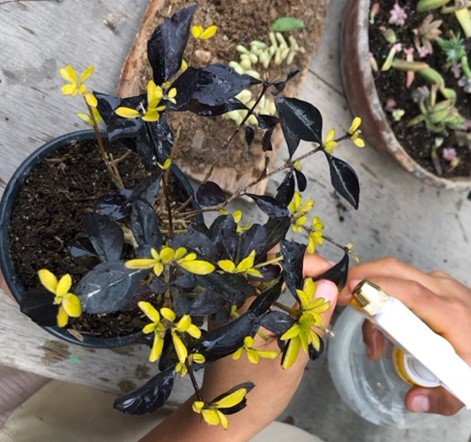
- Plant care: incorporating a plant maintenance routine is an indispensable strategy, especially for people with mental disorders or at-risk adolescents. This task allows participants to become more aware of their needs and the plant’s needs. Often, we give participants plants that need to be “recovered”. This will activate the innate healing capacity that we all have.

Examples of practice
Plant anthropomorphizing: An 8-year-old institutionalized boy adopts a plant that he decides to nurture for his little sister. We taught him the plant maintenance routine, which he grasped very well from day one. At the beginning of every HT session, he performed the maintenance routine neatly, and after a few sessions, he said: “I am using my fingers as the towel I use to dry my body when I get out of the shower”. With this activity, we were able to address the goal of Sense of Care, which is fundamental in an institutionalized child.
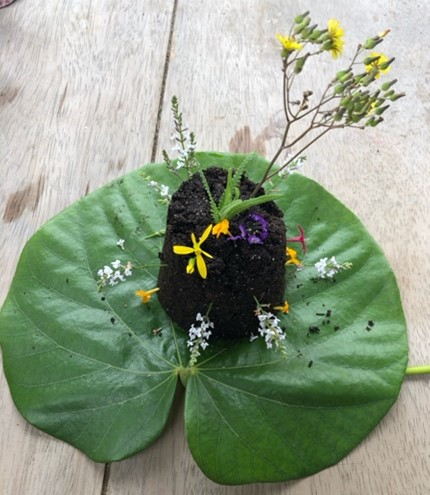
Plant Narrative: 6-year-old child, a survivor of physical and sexual trauma. This case was one of the most difficult we have had in practice. The child had severe emotional traumas and aggressive behaviors. With patience and working one-on-one with him, twice a week, after 8 weeks we accomplished the following:
- Identification of the garden as a safe place
- Identification of fragrances as soothing
- Acquisition of sense of self and selfcare (birthday cake)
- Acquisition of the sense of care (conscious breathing and appreciating silence)
- Emotional regulation
- Sense of place & belonging (sanctuary)
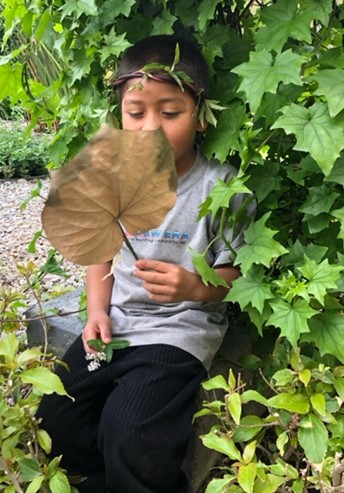
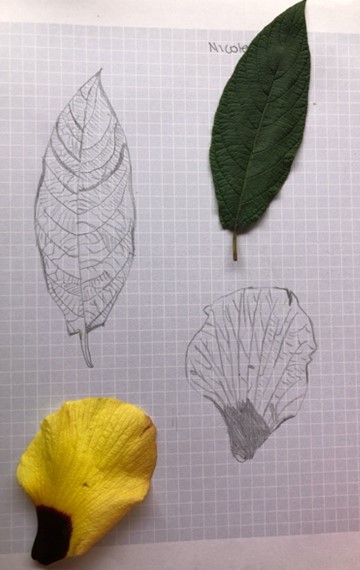
- Conscious observation: 13-year-old girl, trauma survivor. The girl had developed an inner fantasy in which she talked about a parallel world where everything was perfect: her relationship with her mother was good, their economic status was solid, and they were going to change their residence to the United States. During the first HT sessions, she managed not to do the planned activity, but do what she wanted. Gradually, we brought her attention to the present moment by inviting her to observe and feel the present moment. One of the activities we offered to address this goal was botanical drawing.
STEP 5 – Closure and Reflection
Duration: 10 minutes
This last step of the intervention includes tidying the workspace and reflection. Tidying the workspace is a fundamental task to foster independence and responsibility and finish the activity in a calm state of mind.
During the minutes of reflection, we recap everything we have learned, asking if the goal was achieved, and inviting participants to share their feelings or lessons learned.
References
- Alice W. Burlingame (1974). “Hoe for Health”
- Nevin Harper, Kathryn Rose & David Segal (2019). Nature Base therapy – New Society Publishers
- Dan O’Brien (2010). Gardening Philosophy for Everyone – Wiley Blackwell
- Stella Saladino (2022) – “Pensa come una pianta” (Think like a plant) – Tréfoglie
- Colleen Walsh – What the nose knows, The Harvard Gazette, February 27, 2020