Note: This post was originally written in French, and can be read in French here.
The first time I learned about Mirela Maganha was on World Therapeutic Horticulture Day, the brainchild of Fiona Thackeray which debuted in 2023 (the 2024 version will be held on May 18, by the way). It was this post on LinkedIn that encouraged me to contact Mirela to find out more. I’m delighted to give the floor to this Brazilian pioneer whose sensitivity led her to discover horticultural therapy, even though the discipline is virtually unknown in her country. That did not deter her in the least. The power of social networks brought her into contact with like-minded people. And she wasted no time in getting down to business in the state of São Paulo where she lives.
What are your personal experiences of gardens and nature?
I’m the daughter of a rural farmer, I lived on a farm until I was five, and even when we moved to the city, our house (to this day) has an area of land. When I was a child, this was my space to play and grow. When we moved to the city, my grandparents stayed on the farm and I was there on weekends, as I loved going out to play in the field, playing with the animals, swimming in the river and working in the garden with my grandmother.
I believe that this early contact with the earth influenced the love I feel for all things natural, and by following the way my grandmother cared for everything, it influenced me to want to be like her, to care for plants, animals, to feed on what the earth produces, to plant my own remedies. As we know, when we love something, we bring it into our lives in a respectful way and try to pass it on to others, with the aim of making them aware that it can have a positive return. This is what I try to do with my students, for example, show them how being in contact with nature, touching the soil and enjoying its fruits can be positive for their lives. As well as taking care of it all because we are nature, and we need to be included in the care we offer.
How did you become interested in the benefits of gardening on mental health and health in general?
When I started studying agronomy, I saw a vast field of activity, and one of the areas that interested me was medicinal plants to help the most deprived communities in the city as part of church activities. To better understand the subject, I bought some books and, by chance, I bought one on social and therapeutic horticulture, a subject completely new to me. As I read more and more, I became interested in the subject and started doing research to better understand what it was all about and how to carry out horticultural activities to save human well-being. From there, I expressed my interest to a teacher. But she quickly told me that it would be difficult to work in this field in Brazil, because the purpose seemed more social than economic, and also because the discipline was not recognized.
Seeing my commitment to this field, my teacher advised me to take part in the faculty’s entrepreneurship program, which offered the opportunity to present a social project. I wrote up a horticulture project to work with students from APAE (Association of Parents and Friends of Exceptional Children), children with neurodiversity. The project was ready, but the pandemic arrived, and the program was cancelled as there were no funds left to finance the activities. For a few months, I researched the subject and realized that I couldn’t abandon the idea of implementing a project of this type. That’s when I discovered the existence of a Therapeutic Community working to rehabilitate people suffering from chemical dependency near my town. I contacted them and asked if they had any activities in this field. They said they did not and they left me free to carry out whatever project I wanted. From then on, I intensified my studies in the field to develop a plan of activities, evaluation and content to carry out the horticultural therapy project.
What is your professional background and training in horticultural therapy?
My dream was always to study agronomy, but when I left school I couldn’t, so I went to business school. I was already working in the area, in a factory. After a while, I specialized in project management and changed jobs. Today, I’m responsible for the administration of a small company in the neighboring town. After a few years with this company, the local college presented a course in agricultural engineering and I was immediately interested. I thought about the five long years it would imply, but also about the dream I’d always had. So I enrolled. It was through balancing work, university and projects that I identified with horticultural therapy and began to devote myself to the field. I began my horticultural therapy training by reading a book and doing research, as well as networking through social media.
The first contact I had with professionals in the field was Leila Alcalde who recommended a book, which I immediately obtained so I could study further. I started following professionals in the field on social media to keep up with their activities, attend events or participate in online activities. Then I started watching Trellis Scotland and Fiona Thackeray contacted me to ask about my experience of horticultural therapy in Brazil. She invited me to present my project at the Trellis Seminar in 2022. The horticultural therapy project I developed was a case study that I used for my final year thesis at the University of Agricultural Engineering. In addition, I researched activities and cases already published in other countries as well as activities carried out by traditional institutions in the region, culminating in a study “Therapeutic vegetable garden project in the rehabilitation of substance abusers “.
In 2022, I set myself the goal of taking an agro forestry course, as it’s a way of growing crops that looks at the system in a healthy way, taking care of the soil and promoting diversity in the same space. I had the opportunity to obtain a postgraduate degree in agro ecology, with a focus on agro forestry. When we started our last course, I decided to maintain the same line of research, now in a biodiverse system. When I told my advisor about my idea, she was surprised by the topic and agreed to guide me. This research aims to introduce readers to the different ways in which a biodiverse system can contribute to human well-being, whether through contact with the earth when preparing the soil, or by planting different vegetables and fruits that can promote the family’s food security, but also by encouraging coexistence between the people involved, strengthening their bonds, creating opportunities and always keeping humans in the natural environment, never separating the two.
At the moment, I’m still researching the activities, how best to apply them, how to assess the person’s progress, among other important aspects. In addition, I’m always in touch with Fiona from Trellis Scotland. We exchange ideas and she guides me in my projects, as I’m starting to work in this field in Brazil. She put me in touch with Daniela (Silva-Rodriguez Bonazzi) in Peru (HTI graduate and blog writer). I know that her organization in Peru is the closest to me geographically. I haven’t taken Daniela’s course yet, but I hope to be able to do so as soon as possible, as one of my goals is to improve my activities every day and promote horticultural therapy in Brazil. Today, I can combine different activities at the same time, working both in the administrative area of a company and providing services in the agronomic field, including horticultural therapy.
Can you describe the projects you are currently involved in?
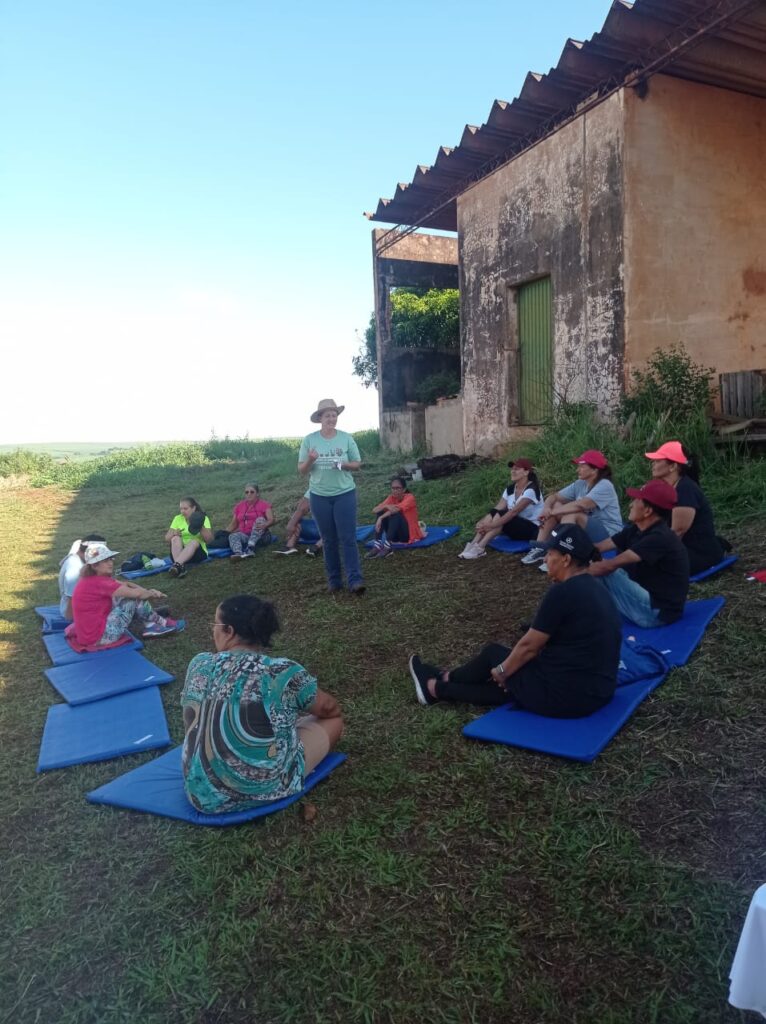
I am currently a service provider in a civil society organization (OSC Florescer), a partner of the city’s Social Assistance Secretariat, which runs socio-educational workshops to work on coexistence and strengthening links between participants, in order to overcome a certain type of fragility, be it financial, emotional or physical. The target audience I work with are adults, the basis of the activities being family farming.
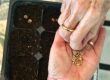
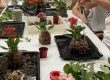
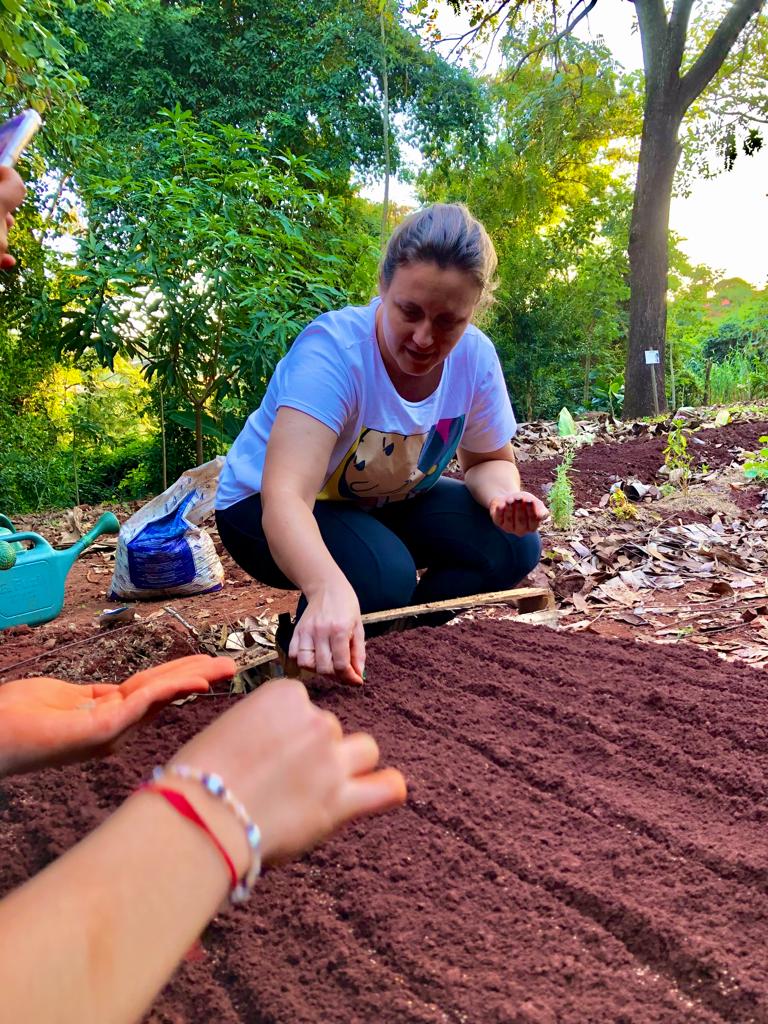
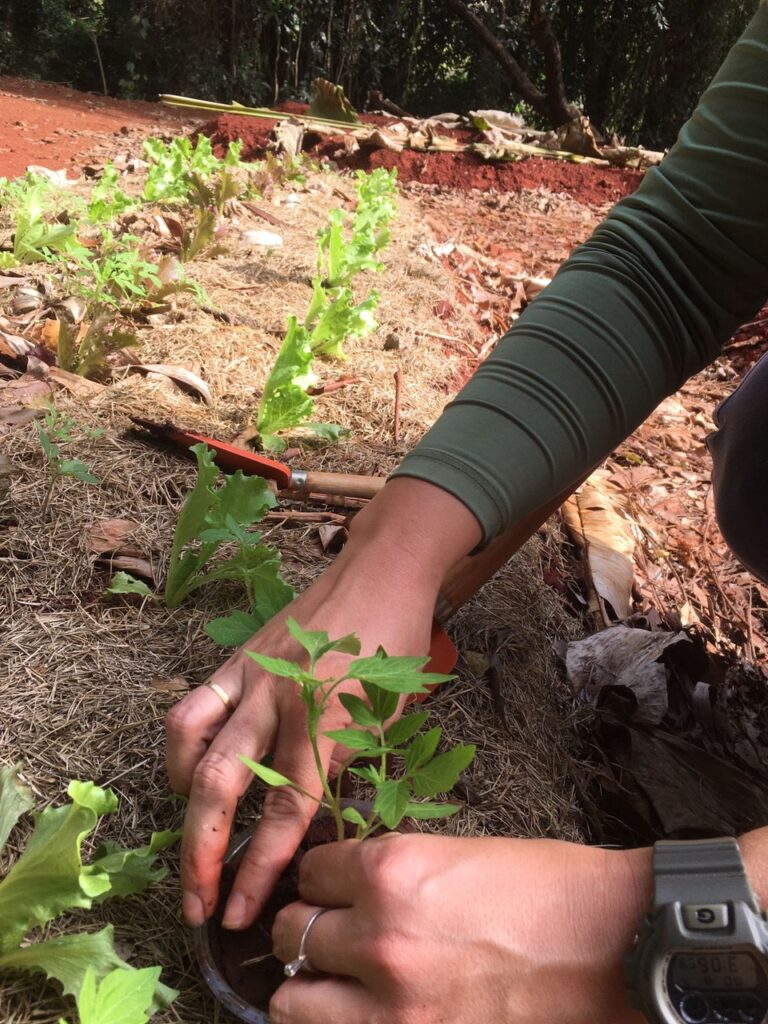
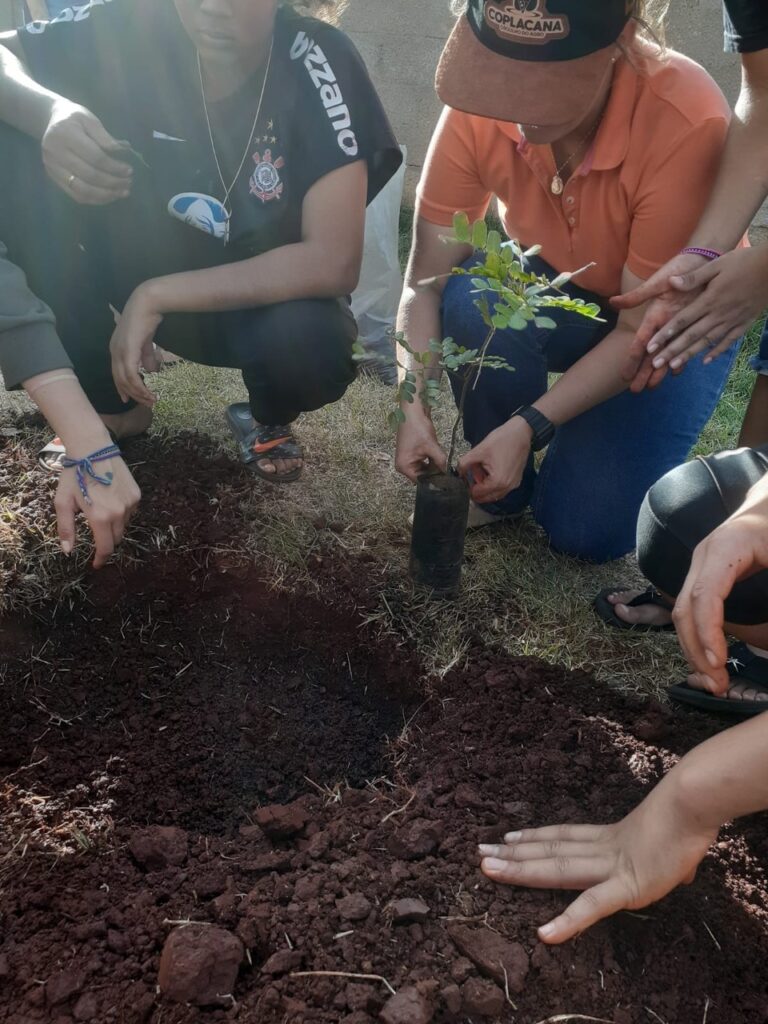
The environment in which we work with this public is an urban garden, which gives us the opportunity to carry out different activities, from garden management to lectures and manual activities. The service is not therapy-oriented, but most of the activities directly influence human well-being, which is in line with the service’s objectives and is directly linked to the basics of horticultural therapy. We carry out activities such as: producing flower seedlings, gardening, planting flowers in pots, preparing beds, planting vegetables in beds, harvesting vegetables, manual activities, reading circles on plants and their benefits, tree planting, painting and more.
These activities are designed to help participants generate income by learning new techniques and empowering them. In addition, plant-reading workshops enhance participants’ knowledge and encourage greater contact between human beings and the natural world, making it clear that we are part of it and not isolated. In this way, we present and emphasize the benefits that these activities can promote in human beings and their well-being.
Participants have already given various reports on how important these activities are to them and how they make a difference in their daily lives. As we have participants who have been taking part in the workshops for around a year and a half, they are in a position to make a good assessment of the activities and how they influence their lives. Our coordinator is a psychologist and I always talk to her about my horticultural therapy projects and the work I do with our service participants. Recently, I asked her if we could consider our activities therapeutic, even though as I explained, that’s not the aim of the service. However, she told me that the activities I develop have a therapeutic purpose, which can be assessed by the participants’ reports and the reports I write at the end of each activity. So, as well as promoting well-being, the therapeutic gains of these activities are a plus for our participants.
This is very relevant to our service, as the majority of our participants deal with unemployment, depression, anxiety attacks, problems linked to insomnia, family problems, difficulties in looking after themselves and valuing themselves due to the busy routine they have with their families.
In addition, I’m developing a project to present to a retirement home in the neighboring town, to start activities hopefully in 2024, with various horticultural therapy activities aimed at elderly residents. Alongside my activities, this year I’m volunteering at a school, planting trees and gardening with teenagers, which I see as a way of beautifying the school and creating a natural space they can connect with. It’s a way of encouraging them to strengthen their relationship with nature and see how positive it can be.
Do you have any previous projects you’d like to share?
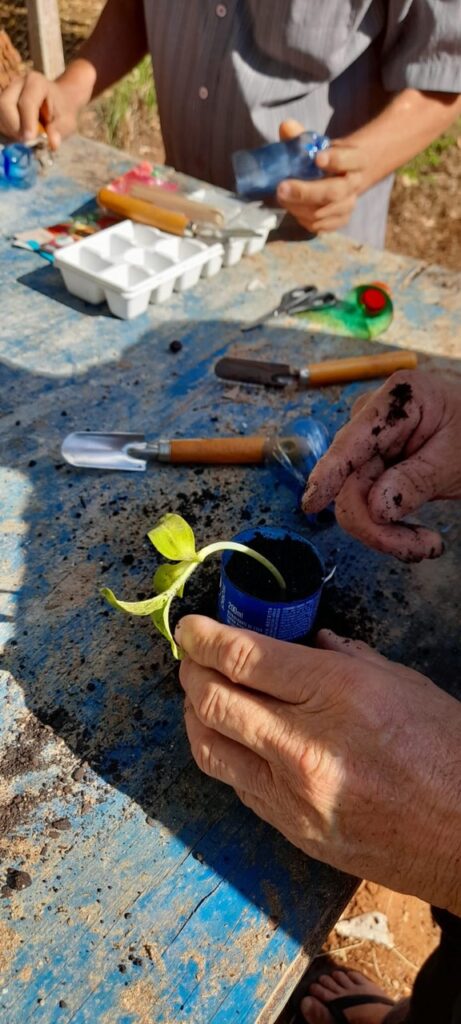
My first horticultural therapy project took place in the therapeutic community with people recovering from chemical dependency. As well as being my first contact with this type of work, it was my first contact with this “recovering” public. When I went to present the idea to them, I was well received and they agreed to take part in my project. The activities were carried out in groups for six months, once a week. During this period, we carried out different activities that could have an impact on their treatment, whether learning gardening techniques that can be a new alternative in daily life or interacting with colleagues during activities that influence socialization, the recovery of emotional memories. There are also activities that target motor coordination, which is severely weakened by drug and alcohol use. I offered all these activities. Since participants were seeing a psychologist as part of the program, she was able to help me evaluate the activities in relation to the treatment in progress.
To evaluate them, I created questionnaires they answered once a month. It was easy to answer the questions, which made it possible to collect data for analysis and verify which activities were the most accepted and attractive, which generated the greatest positive impact, among other details. For me, it was an incredible experience, so much so that I’m still involved in this field today, and I intend to continue. Because it’s wonderful to see how horticulture and gardening can help people recreate social ties. I’m grateful for this first opportunity and want to return to the same community to carry out a new project with the new residents, when I get the chance. If I had to describe everything I’ve done and how I feel about this project, I could go for a long time.
What can you tell us about the situation with HT in Brazil?
I don’t currently know of any projects in Brazil that are advertised as horticultural therapy projects in particular, nor a movement that is being developed. When I was doing my university research, I identified some published research that mentioned human activity in vegetable gardens or the management of plants for therapeutic purposes, and how this could help them. However, in Brazil, there is still no actual practice of this type of activity with the recognition of therapeutic horticulture. I believe that some people may carry out activities for this purpose, but without the basis and recognition that exists abroad, so these practices are often unknown.
What I have noticed are courses and guidelines from some institutions that are trying to include green spaces in schools and emphasize how important this contact with the natural world is for a child’s development so that the child can already grow up in contact with nature. I have taken an online course called “TiNis (Tierra de Niños) for educators” which provides advice on children’s contact with the natural world, the inclusion of this environment and natural practices within the school and their benefits. In addition, in 2022, I took a course promoted by the Nature & Children Institute in partnership with the Ministry of Citizenship. This was a course enabling educators to experience nature in order to learn from it for school environments, projects, among other places that act as educators.
From my point of view, there should be an institution that takes an interest in all these isolated practices and can organize ideas, verify the activities carried out and maintain active contact, because it could be a support, if it fits in with the horticultural therapy proposal. As far as horticultural therapy is concerned, there is so much evidence that this practice is fundamental and essential for promoting human well-being, and with all Brazil’s representation in agriculture, there should already be an institution representing our country in this field.