
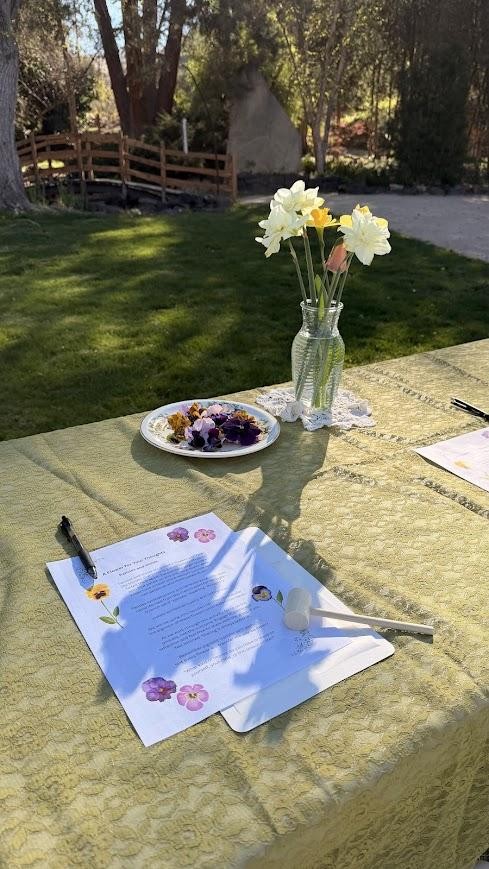
May is my favorite “garden” month. When spring rains are abundant, flowers cover my garden and my clients’ growing spaces. These plants require tending and attention at this time of year. Much like our gardens, the field of horticultural therapy/therapeutic horticulture offers both abundant gifts and real challenges.
This spring, I was grateful to speak with Katie Pukash, THP, about the gifts and challenges she has faced this year in building the new HT/TH program at the Idaho Botanical Garden .
Like many in our field, Katie’s path to therapeutic horticulture began with her own healing. In 2017, she participated in a trauma support group and took a field trip to a goat farm. She was enchanted with the experience of being outside, with beautiful plants and animals and wondered how she could do this as a career. With the help of her therapist, she began exploring job opportunities and found horticultural therapy. “Our own process of healing can lead us to horticultural therapy, and then lead us to help others heal,” she reflects.
Opportunities of an Empty Garden
She completed her HT certificate during the pandemic and looked for every hands-on opportunity she could find. While walking past City Light Home for Women, she spotted an empty garden. She asked if she could do her internship there. They accepted, and she completed her internship, created the program, filled the garden beds, and held down a full-time bookkeeping job all at once.
She also volunteered at Boise Vertical Farm, which proved pivotal. When Katie was interviewed on a local radio show, the Executive Director of the Idaho Botanical Garden was listening and reached out afterward to invite Katie to join their team.
There had been a long-planned HT/TH program as part of its expansion, and after an initial interview, Katie was hired. She has been central to creating the new therapeutic garden, choosing sensory plants and developing the full curriculum.
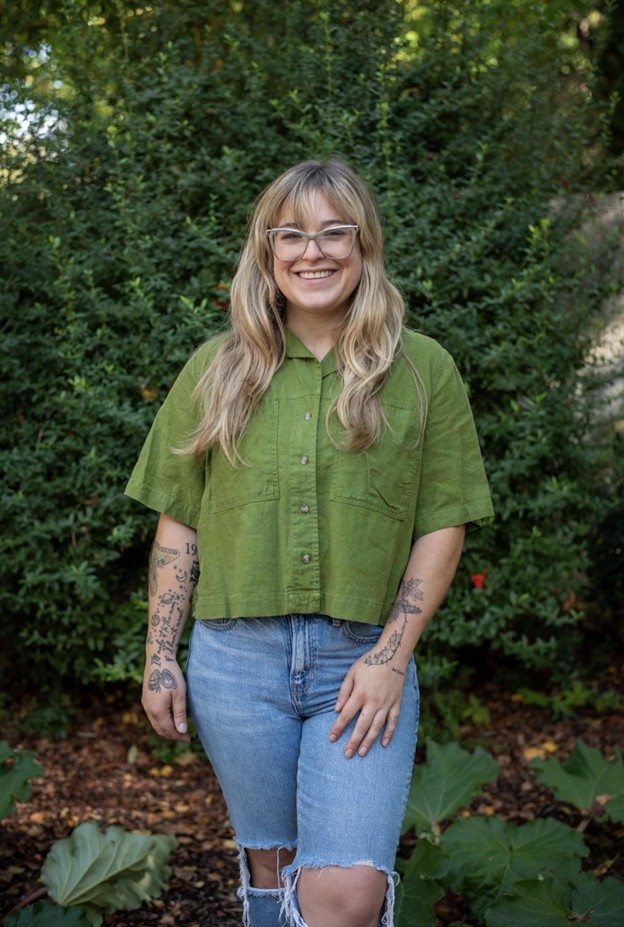
With funding from Cambia Health Foundation, the program provides 12-week programs for participants from the Community Re-Entry Center, women recovering from trauma and grief, and youth with behavioral health needs. Several community days are open to healthcare workers, educators, new mothers, veterans, with fee-for-service options for outside organizations.
Finding Your Place Takes Time
Katie is realistic about the challenges of this work. It can be lonely, and finding your place takes time. She encourages those new to the field to seek out a community of practitioners early – “Be patient…and the right thing will come along.”
Her next challenges include earning the AHTA HT-BC, and helping the horticultural therapy field grow. Her passion for gardening and healing has created a new community for many residents in Idaho’s Treasure Valley. It turns out May is a good month for growing programs like this one, too.