By Carime Moura1 and Daniela Silva-Rodríguez Bonazzi2
This blog was originally written in Spanish, and can be read in Spanish here.
Eating disorders in adolescence, such as anorexia nervosa, bulimia nervosa, and binge-eating disorder, are closely tied to emotional, cognitive, and social difficulties that affect family life, school functioning, and peer relationships. These conditions are often accompanied by anxiety, fear of weight gain, low self-esteem, distorted body image, perfectionism, and rigid thinking patterns, as well as frequent comorbidities including depression, anxiety disorders, obsessive–compulsive disorder, ADHD, and autism spectrum disorder.
Given this clinical complexity, an integrated and multidisciplinary approach is required, one that addresses not only medical and nutritional aspects but also the emotional and psychological components of the disorder. Within this framework, horticultural therapy emerges as an effective complementary tool in hospital settings. Its practices support emotional regulation, self-care, cognitive flexibility, social integration, and a renewed relationship with food. This blog explores its theoretical foundations, clinical applications, and examples of activities aimed at promoting the overall well-being of hospitalized adolescents.
Horticultural Therapy as an Integrative Intervention for Eating Disorders
Horticultural therapy (HT) can be used as a complementary intervention alongside multidisciplinary treatment for eating disorders, directly contributing to the management of emotional and cognitive symptoms. Grounded in plant-care activities, HT can promote benefits such as:
- Reduced food-related anxiety
- Reflection on body-image distortion
- Strengthened self-worth
- Work on rigid and perfectionistic thinking patterns
- Increased cognitive and behavioral flexibility
- Promotion of self-care habits
- Improved social interaction and interpersonal relationships
Therapeutic Interventions and Practical Activities
To address rigid and perfectionistic behaviors, it is recommended to design activities that accept mistakes and highlight the natural absence of perfection. This helps participants understand that every organism has its own pace and growth rhythm, encouraging reflection on healthy balance. In hospital contexts, where patients often lose track of time, horticultural therapy activities help reestablish temporal awareness.
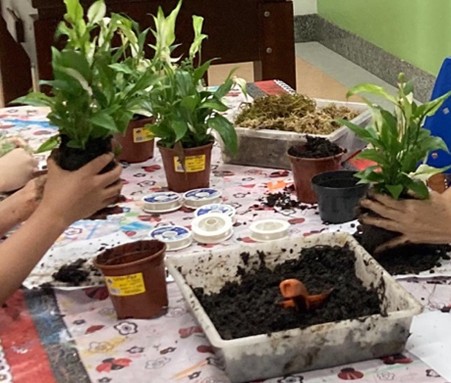
Some suggested activities include:
- Sowing vegetable seeds (radish, lettuce, spinach, arugula)
- Growing vegetable sprouts (beet, cilantro, radish, mung bean)
- Propagation through herb cuttings (rosemary, basil, mint, sage)
- Leaf propagation (succulents, African violet)
- Seasonal and time-related activities
Activities that involve choosing and caring for plants can reinforce self-care habits while inviting participants to reflect on how proper emotional and physical nourishment is essential for growth. Introducing succulents of different shapes and colors allows each participant to select one they relate to, creating a personal symbolic bond.
Additional strategies include:
- Presenting plants with irregular leaves or natural markings to reinforce acceptance of personal imperfections.
- Encouraging daily plant care as an exercise in gentle and sustained responsibility.
- Inviting participants to keep a journal documenting plant growth alongside their daily thoughts or emotions, integrating observation, reflection, and personal expression.
Expressive Arts Using Natural Materials and Self-Esteem
Expressive-arts activities using natural materials create experiences of creativity and belonging that strengthen self-esteem. Below are two expressive-arts activities and their therapeutic objectives.
Creating Kokedamas
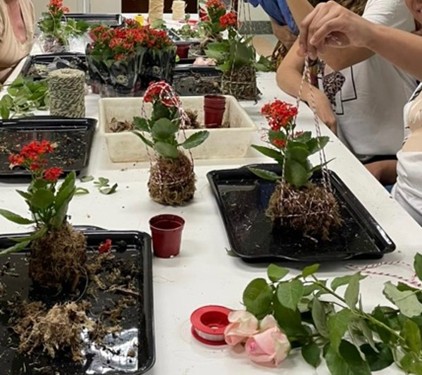
Kokedamas, plant spheres made with moss and substrate, are a horticultural therapy activity that encourages creativity, sensory connection, and personal expression. Their hands-on nature allows individuals to focus on the process without any expectation of perfection, promoting openness and acceptance.
Working with natural materials of varying textures stimulates sensory perception and mindfulness. Shaping the sphere, choosing the plant, and decorating with moss foster sensory engagement and a kinder connection with one’s own body through interaction with nature.
Therapeutic Objectives of the kokedama activity
- Promote emotional self-regulation
- Reduce anxiety and stress through rhythmic, sensory manual activity.
- Encourage calm and presence through contact with natural materials.
- Develop non-judgmental acceptance
- Reduce self-criticism by focusing on the creative process rather than the result.
- Strengthen tolerance for imperfection and experimentation.
- Enhance body awareness
- Support bodily awareness through touch, gentle pressure, and exploration of textures.
- Provide safe, pleasant sensory experiences that counteract body-disconnection patterns common in eating disorders.
- Boost self-esteem and sense of accomplishment
- Strengthen personal competence through completing a creative piece.
- Reinforce self-confidence by making personal choices (plant selection, design, size, etc.).
- Encourage self-care
- Build a symbolic relationship between caring for the kokedama and caring for oneself.
- Develop gentle, non-demanding routines of attention and maintenance.
- Stimulate creativity and personal expression
- Offer a safe space to explore colors, textures, and shapes.
- Facilitate indirect emotional expression through plant-based creation.
- Strengthen social skills (if done in groups)
- Improve communication, cooperation, and mutual support.
- Create an environment where different creative rhythms and styles are validated.
- Increase connection with nature
- Promote psychological well-being through direct interaction with natural elements.
- Stimulate sensations of grounding, stability, and growth.
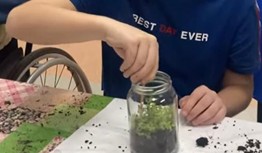
Creating Terrariums
Terrarium creation involves designing a miniature ecosystem inside a glass container using soil, stones, moss, and easy-to-care plants. This activity facilitates safe, close contact with nature, fostering observation of a living, self-contained environment.
The process requires attention to detail and creative decision-making, encouraging deep concentration and reducing intrusive thoughts. Handling materials of various textures helps restore positive bodily sensations and improve one’s relationship with their body, particularly relevant for individuals with eating disorders.
Terrariums also offer a space for personal expression without “right” or “wrong” outcomes, supporting non-judgmental acceptance. They become symbolic representations of balance and self-care that accompany participants through their recovery journey.
Therapeutic Objectives of the terrarium activity
- Emotional self-regulation
- Reduce anxiety and stress through gentle, mindful manual activity.
- Provide a calming environment that supports reconnection with pleasant sensations.
- Acceptance without judgment and flexibility
- Foster tolerance for imperfection and creative experimentation.
- Reduce self-criticism by prioritizing the experience over perfection.
- Body awareness
- Facilitate sensory reconnection through tactile contact with natural materials.
- Create safe, soothing bodily experiences.
- Self-esteem and sense of accomplishment
- Increase personal competence by completing a decorative, living project.
- Strengthen confidence in decision-making and caring for a personal creation.
- Self-care
- Draw parallels between terrarium maintenance and self-care.
- Promote gentle attention habits through simple terrarium needs (light, humidity, observation).
- Creativity and personal expression
- Offer a safe space to create a unique composition reflecting identity and preferences.
- Encourage symbolic externalization of emotions.
- Social skills (in group settings)
- Facilitate respectful communication and non-competitive collaboration.
- Promote community, mutual support, and validation among participants.
- Connection with nature
- Provide contact with natural elements that enhance psychological well-being.
- Stimulate sensations of harmony, balance, and vitality.
Group Activities and Sensory Stimulation
Group activities encourage interpersonal exchange and strengthen social bonds.
Example of a group activity:
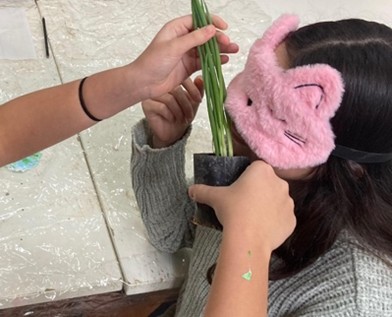
- Participants touch and smell aromatic plants (lavender, thyme, basil).
- They divide into pairs.
- One partner is blindfolded and must identify the plant presented by the other.
This practice encourages closeness, light-hearted interaction, relaxation, mindfulness, and sensory activation.
Food Safety, Nutrition, and Reframing the Relationship with Food
The involvement of the nutrition team is essential when designing horticultural therapy activities that involve food. Their participation ensures safe, meaningful experiences aligned with each person’s needs. Their contributions include:
- Offering nutritionally balanced and culturally familiar options.
- Suggesting culinary preparations that incorporate the produce grown during sessions.
- Exploring emotional memories linked to food, fostering a more mindful and compassionate relationship with eating.
- Expanding, when appropriate, the repertoire of healthy foods available to participants.
In this process, plants become a powerful metaphor. Just as they require light, water, and nutrients to grow, individuals can reflect on what “nourishes” them emotionally. This perspective shifts focused away from guilt, control, and anxiety and toward the idea of care; care practiced both with plants and with oneself.
Structure, Predictability, and Emotional Regulation
Creating a weekly schedule that specifies plant-watering days and times supports predictability, reduces anxiety and stress, fosters emotional regulation, and promotes responsibility.
Reframing the Relationship with Food
Following the full life cycle of food, from sowing to harvest, offers a profound opportunity to transform how individuals relate to what they eat. This process moves food away from a place of conflict or suffering and toward a more harmonious, conscious, life-connected experience.
Plant growth, with each plant following its own rhythm and needs, becomes a powerful therapeutic metaphor. This analogy encourages self-acceptance and interpersonal development, reinforcing aspects such as body image, self-worth, and the understanding that every human process has its own timing.
Adapting to Treatment Phases
In working with patients with eating disorders, it is essential to integrate horticultural therapy with the multidisciplinary team. During early phases, when physical and emotional energy may be low, more passive activities are prioritized, such as expressive-arts activities with natural materials or nature-based activities like caring for potted plants, which require minimal physical effort. As treatment progresses and medical clearance is given, activities involving greater physical participation can be introduced, gradually supporting patient strengthening and preparation for hospital discharge.
Final Considerations
Horticultural therapy stands out as a particularly valuable integrative intervention in hospital settings for young people with eating disorders. By supporting emotional regulation, promoting self-care, increasing cognitive flexibility, and fostering a symbolic and respectful reconnection with food, this practice contributes meaningfully to the rehabilitation process. It also strengthens the individual’s relationship with themselves, with others, and with the environment, supporting a more complete and sustainable recovery journey.
References
- American Psychiatric Association. Diagnostic and Statistical Manual of Mental Disorders – DSM-5-TR. 5. ed. rev. Washington: APA, 2022.
- Fairburn, C. G. Cognitive Behavior Therapy and Eating Disorders. New York: Guilford Press, 2008.
- Haller, Rebecca L.; Capra, Christine L. Horticultural Therapy Methods: Connecting People and Plants in Health Care, Human Services, and Therapeutic Programs. 3. ed. Boca Raton, FL: CRC Press, 2025. ISBN 978-1032769622.
- Curzio, O.; Billeci, L.; Belmonti, V.; Colantonio, S.; Cotrozzi, L.; De Pasquale, C.F.; Morales, M.A.; Nali, C.; Pascali, M.A.; Venturi, F.; et al. Horticultural Therapy May Reduce Psychological and Physiological Stress in Adolescents with Anorexia Nervosa: A Pilot Study. Nutrients 2022, 14, 5198. https://doi.org/10.3390/ nu14245198
Parte inferior do formulário
1 Instituto de Psiquiatria HC-FMUSP, Rua Dr. Ovídio Pires de Campos, 785, Cerqueira César, São Paulo, Brazil; [email protected]
2 Instituto de Horticultura Terapeutica y Social, Av. Grau 810, Lima, Peru; [email protected]