Four Principles of Design to Consider in your Next Project

Every Monday, our client gardeners gather and catch up over steaming mugs of coffee and tea. They come from different backgrounds, different walks of life, different parts of the city, all having experienced a life-changing illness, injury, or health condition.
As everyone settles in, the discussion switches to the jobs for the day, reviewing together what needs to be done in the garden. Weather invariably plays a factor in the plan while we peer outdoors and take stock of the ever-changing sky that is part and parcel of an island nation. We head outside to gather our tools and set out to the various parts of the garden, allowing a comfortable rhythm to take over as we settle into our jobs, working in pairs or small groups according to the job at hand.
The therapy garden is large, with many diverse spaces on offer – from herbaceous borders to raised beds for vegetable and fruit growing, to a shaded woodland area, a greenhouse and indoor growing areas for seedlings and house plants – client gardeners can choose the areas they want to work in. We often disperse across multiple areas in the morning in our small groups, getting “stuck in” as they say here in the UK. And yet, regardless of where we start our work in the morning, the group will eventually gravitate to the most recently designed space in the garden. What is it about this part of the garden that is so appealing to our group? Why do we always end up working here every Monday?
I’ve thought about this as it relates to garden and planting design and how thoughtful and intentional design creates spaces and environments that just feel good, that feel right. Spaces that our clients want to be in without needing to know why. We, as horticultural therapy practitioners and designers, however, want to understand why, so we can create the best possible gardens. Here are four principles to consider when designing therapeutic working gardens:
Know your Client and Setting
Good design will work for many but by getting to know your client groups and by understanding their needs, you will be able to come up with customizations that can make a big impact. Different populations with differing needs and goals will naturally have different design considerations.
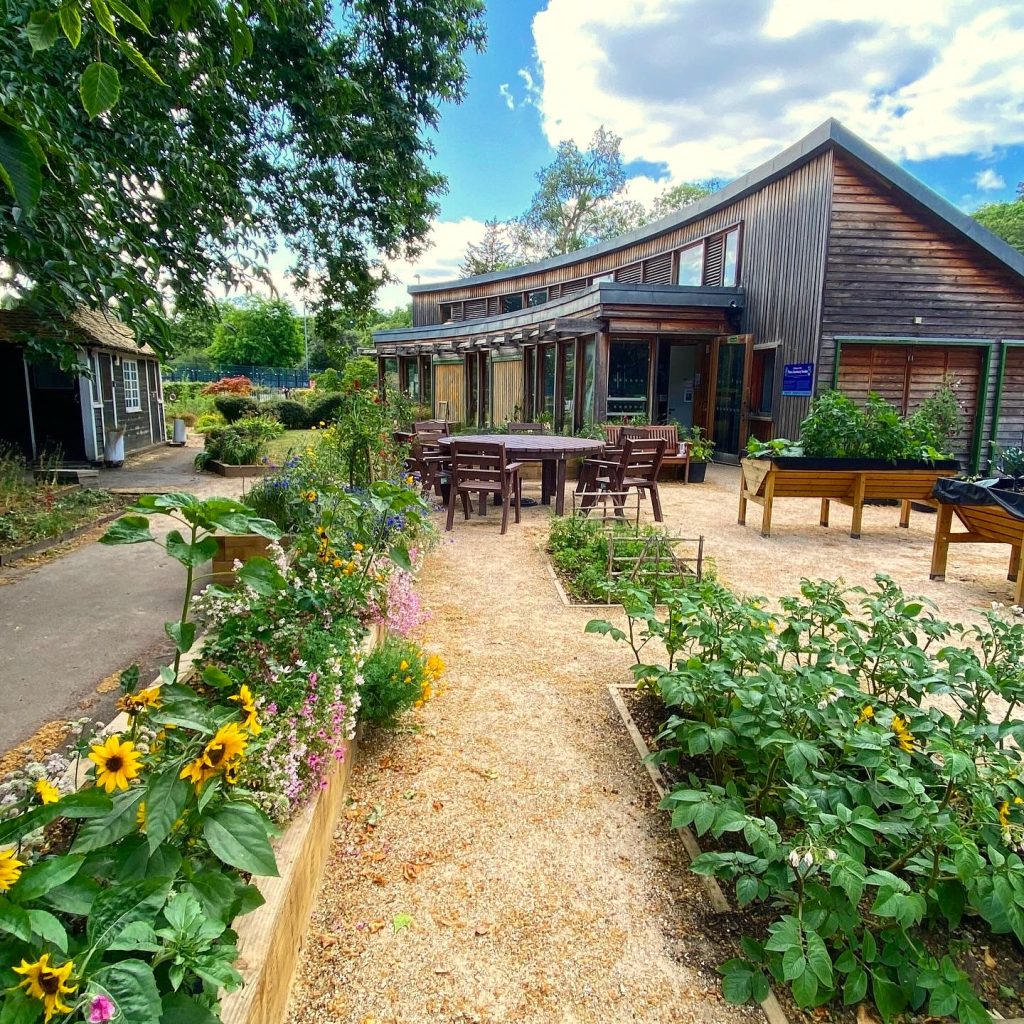
Thinking about our Monday client gardeners, we are considering goals of encouraging light physical activity, increased movement and range of motion and enabling social connection and purpose. Mobility limitations and some degree of cognitive impairment are a norm within the group and help guide our objectives and activities. The newly designed area of the garden which attracts our Monday group provides a very clear layout that can be scanned quickly and easily understood, offering clarity of space with easy navigation and clear entry and exit points. It is an open plan design where multiple people can work on different tasks but still chat easily and offer advice and support. At the heart of the space is a large circular table and grouping of chairs, allowing for seated gardening activities to be completed within a hub of activity. Tea breaks and outdoor lunches naturally unfold at the same table, with shared food and laughter always on the menu.
Ensure Accessibility and Comfort
It goes without saying that accessibility should be a key consideration when designing a therapeutic garden. There are many great resources available that delve into the physical side of things, including this one from Thrive that helps address the perennial debate on size and construction of raised beds. Since the construction and placement of beds will often be a key design consideration, it helps you to think through the many choices and includes a variety of options to suit your population(s). Indeed, our Monday garden is made up primarily, but not exclusively, of raised beds built in seven different configurations and heights, allowing client gardens to choose the space and tool combination that works best for them.
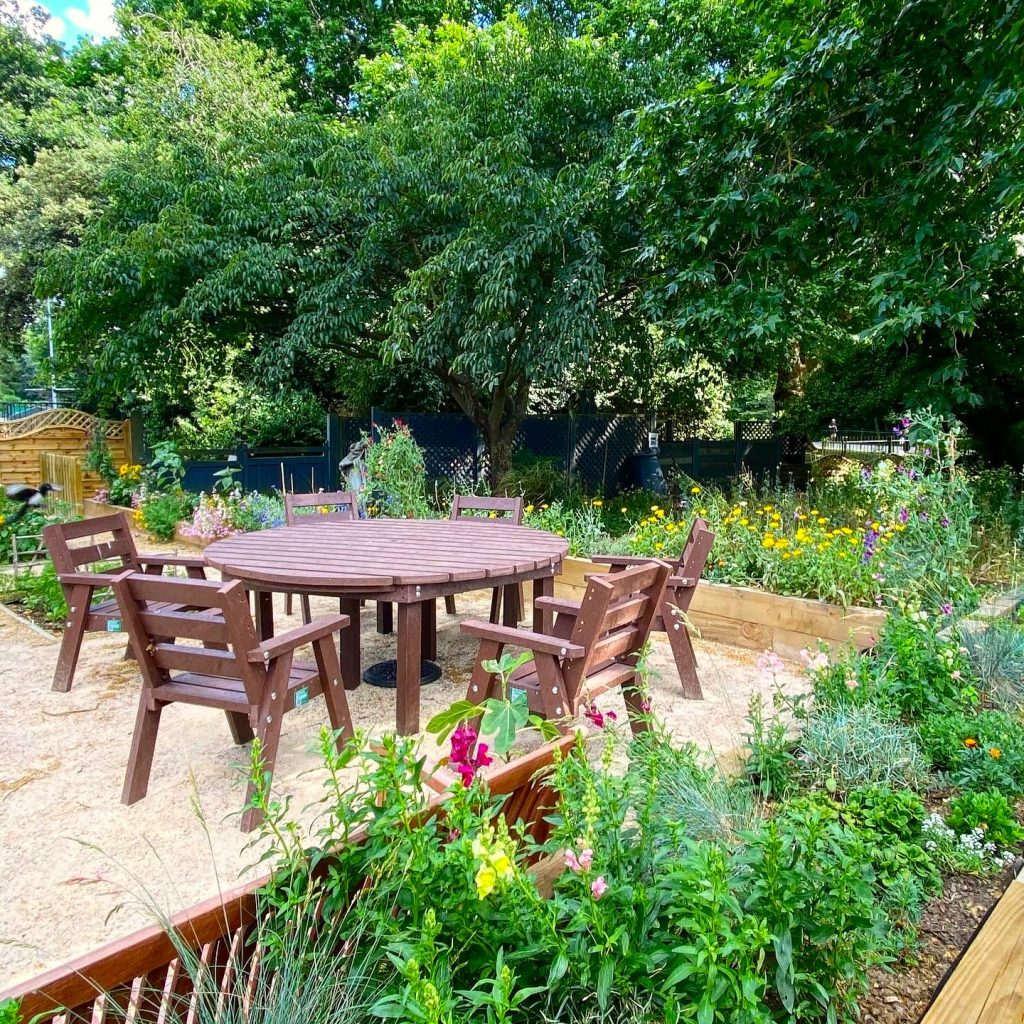
Thinking about light and shade is essential not only for plant selection and growth but also for the comfort of program participants. Depending on where you are in the world, the time of year and individual preferences and conditions, participants may be actively seeking the sun or actively staying out of it. For most of the year in the UK, we are seeking the sun but on very warm summer days, client gardens can work and rest in the shadier zones and we put out the sun umbrella over the central table.
Beyond these more physical considerations, there are deeper factors to consider in terms of psychological, emotional, and cultural accessibility. We could devote a whole article to looking at these factors alone. An essential question to consider: Will garden visitors and participants feel welcome? Will they feel it is their space? Thoughtful consideration of these factors can make a big difference in creating successful design and programming.
Mind your Pathways and Seating
Pathways in our Monday garden are clear, smooth and wide, specifically built for easy navigation across a wide range of mobility aids. Seating is plentiful and provides options to create choice and flexibility in arrangement. Aligning with the general preference for natural materials, wood is our material of choice, with garden furniture carefully selected for ease of getting in and out as well as overall sturdiness and durability.
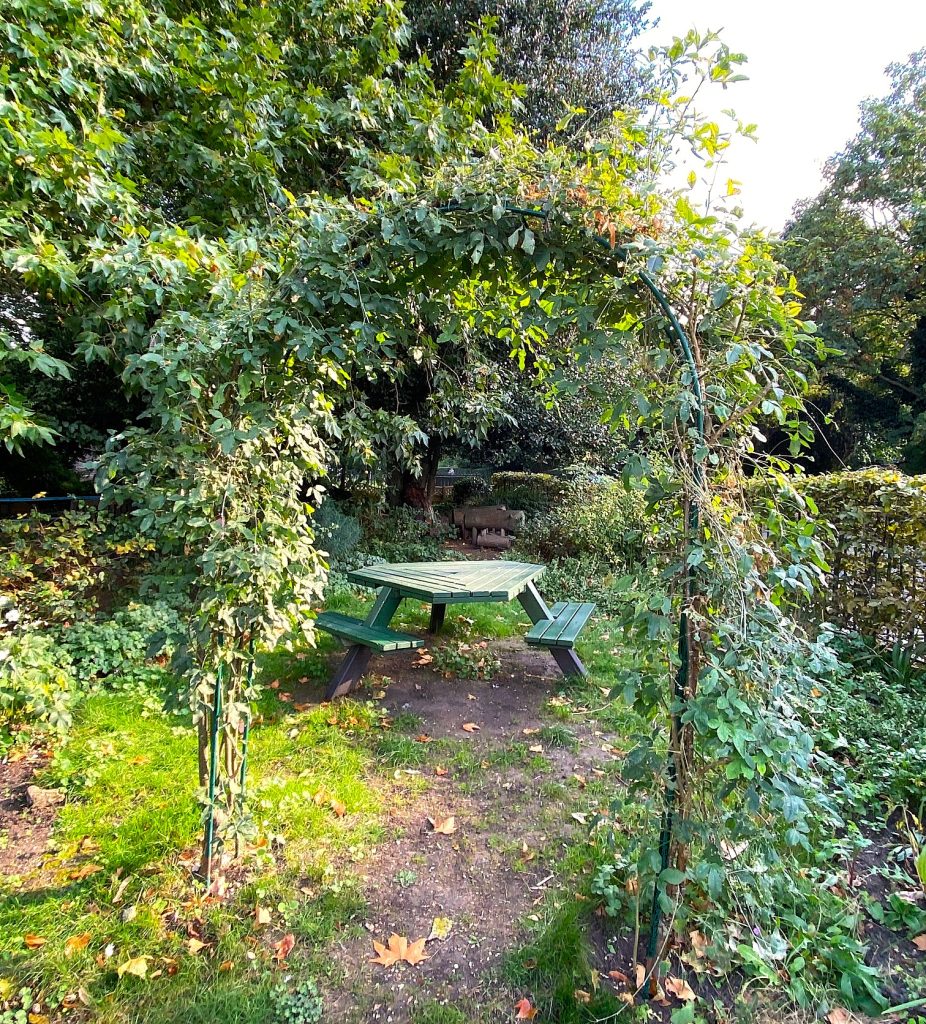
When thinking of path and seating placement in therapeutic garden design, it may be helpful to consider Prospect-Refuge Theory developed by Jay Appleton in his 1975 publication, The Experience of Landscape. His theory is based on our understanding of human evolution, where on the savannahs of Africa, it was beneficial to see a wide expanse in front of you, ideally with water (prospect) and trees and vegetation behind you (refuge). We express higher levels of comfort when we have trees or high bushes behind us and at our sides with an open and peaceful view in front. This theory can help with placement of paths and seating areas so that visitors and participants feel comfortable and at ease in the garden.
Our Monday garden has a perimeter of raised beds and is bordered at the back by shrubs and mature trees, allowing for a gentle feeling of enclosure and security within the space. While the tabletop social area is more open, there is a quieter zone in the back corner where client gardeners can be comfortably ensconced on a bench, surrounded by vegetation with open views into the garden.
Focus on the Sensory, the Here and Now
Ideally, a therapeutic garden should be plant-centric, a green space in line with nature with hardscaping minimized to 1/3 or less, if possible. Our Monday garden is a verdant space where the planting design is sensory led. Colourful displays of herbs provide long seasons of harvesting and cooking potential, while stimulating the senses of sight, scent and taste and simultaneously inviting pollinators into the garden. Soft downy leaved plants invite touch just as tough spikey leaves suggest otherwise. Ornamental grasses bring sound and movement to the garden and provide seasonal interest in the colder months.

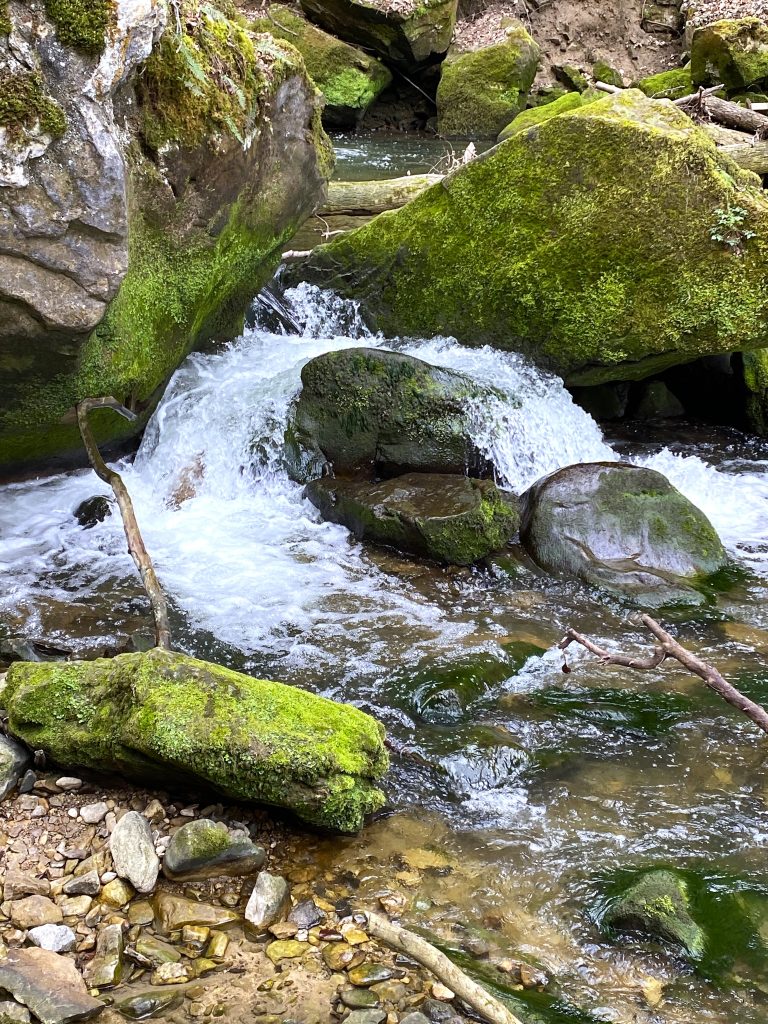
Green and blue are calming colours and are among the easiest for our eyes to process. Not only great for bringing wildlife and biodiversity into the garden, incorporating the blue hues of water will also offer additional calming and healing effects. Natural water environments trigger a parasympathetic nervous system response, promoting relaxation and stress reduction. In fact, flowing water was a defining characteristic of some of the earliest recorded healing gardens. As far back at the 8th century, Islamic Gardens were designed around water and sensory planting. Green is the dominant colour within our Monday garden and water has recently been introduced on a more modest scale with a solar water feature that is enjoyed by birds, pollinators and gardeners alike.
Reflecting on the gravitational pull that regularly brings our client gardeners to the Monday garden, we can now see that its success is rooted in strong design principles. A clear purposeful layout, designed with accessibility and comfort in mind, plentiful seating and working spaces that allow for choice with a sense of security, and verdant planting that stimulates the senses work together to create a welcoming and harmonious space for our client gardeners. Combined with a safe, open and gentle approach to horticultural therapy, the garden offers a peaceful and calm respite for client gardeners, volunteers and staff thanks to its thoughtful approach to therapeutic garden design.
Further Reading:
Cooper Marcus, Clare and Sachs, Naomi A. Therapeutic Landscapes – An Evidence-Based Approach to Designing Healing Gardens and Restorative Outdoor Spaces
Winterbottom, Daniel and Wagenfield, Amy. Therapeutic Gardens: Designing for Healing Spaces