
Program Manager, HT Institute
2026 Fall Newsletter
Horticultural Therapy is making an impact on people’s lives.
Read more about how it’s happening.
HTI Director’s Note: People Plant Symposium 2026
By Rebecca Haller, HTM

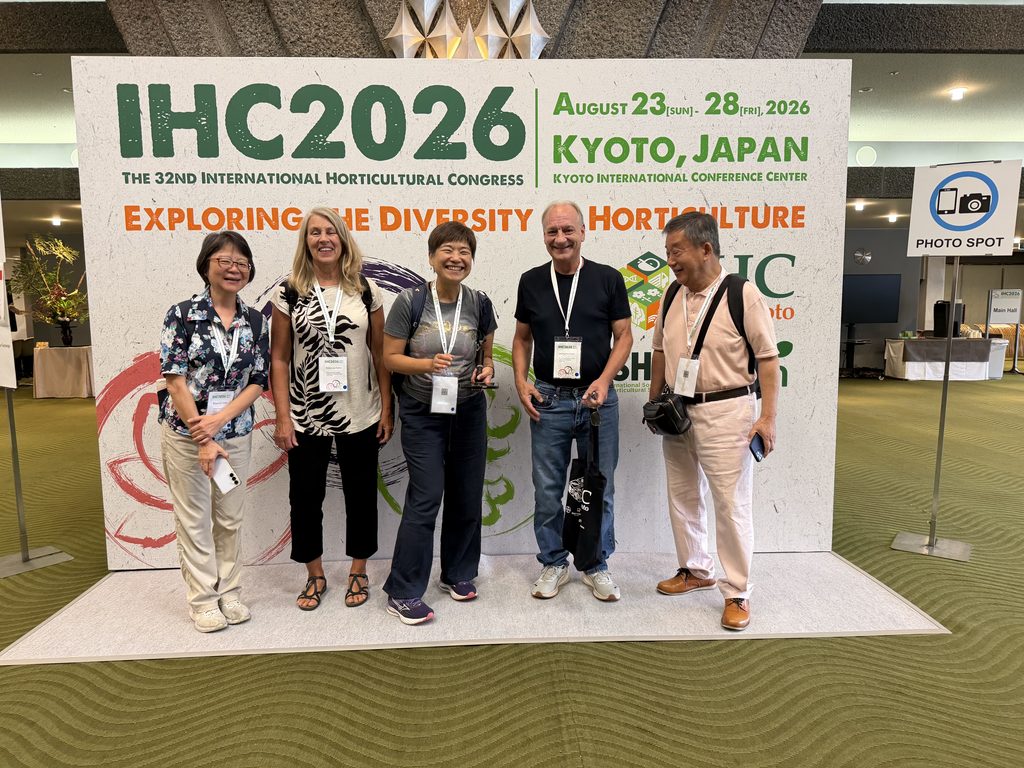
The XVII International People Plant Symposium (IPPS) was held in Kyoto, Japan in August as part of the International Horticultural Congress (a gathering of over 5,000 horticulture researchers, academics, and business leaders). The theme of IPPS – “Exploring the Interaction Between Humans and Nature: Research and Practices for Improving Health and Quality of Life” focused on horticultural therapy and other nature-based interventions, with emphases on research, design, education, and practice.
Speakers from around the world reported on program efficacy, specific techniques, garden and care farm designs, education and protocols, as well as psychological and physical effects of exposure to plants and gardening. Perspectives & field experience from Europe, Asia, and the US were discussed. Throughout the symposium the importance of active engagement in horticulture was emphasized.
HTI Students Contribute
It was an honor to see several former HTI students, as well as students of a former student, contribute presentations or posters on their research and programs. For me, that was especially touching and a privilege to observe.
Conversations and connection with colleagues from across the US and many other countries aways top the list of reasons to attend such an event, and this was no exception. Opportunities for future collaboration, mutual inspiration, and continued relationships were strengthened. Pre- and post-symposium program visits with new and long-recognized associates inspired, broadened perspectives, and offered many moments of delight.
Thanks to all who participated, promoted, organized, and played a part in this experience. I look forward to the next meeting in Iceland in 2028.
Tips for Practice:
Start With the Community:
Using Needs Assessments to Grow Horticultural Therapy Programs
By: Sarah McCracken, Horticulture and Natural Resource Specialist, Colorado State University Extension, Eagle County
Garden-to-Kitchen Program
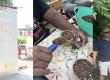
I had the unique opportunity this summer to attend the 32nd International Horticulture Conference in Kyoto, Japan. As a co-presenter for one of the International People Plant Symposium and International Symposium on Horticultural Therapies sessions, I had the opportunity to share some of the therapeutic horticulture work I have been doing as an Extension Specialist with Colorado State University. During my presentation, I highlighted a Garden-to-Kitchen program I co-hosted this past summer in partnership with a local organization that connects Latino families and other underrepresented communities with educational and community resources. The four-session nutrition and horticulture program invited participants to learn a nutritious recipe, prepare and share the meal together, and then guidance with planting (and caring for) one of the vegetables used in the recipe in a fabric pot to take home. The program was made possible through collaboration among CSU and local community organizations that had already identified educational and engagement opportunities that could benefit specific populations within the community. This experience reinforced for me the value of beginning program development with the community itself.
Connecting Universities & Communities
The U.S. land-grant university and Cooperative Extension system is a unique public education and research network designed to connect higher education and scientific knowledge with the needs of communities, farmers, families, businesses, and natural-resource managers. Extension serves as a conduit between universities and the communities they serve, translating research into accessible education while also bringing community needs and knowledge back to the university. The system is place-based and interdisciplinary, simultaneously federally supported, connected to state universities, locally responsive, and publicly accessible. Transitioning from nonprofit work to Cooperative Extension has required me to rethink how I approach program development. At times, it has honestly felt a little like starting over from scratch. The question I continue to circle back to is: “What does my community need from Extension, and how can research-based education help address those needs?”
This question led me to think more deeply about the role that a community needs assessment (CNA) can play in horticultural therapy and therapeutic horticulture. A CNA is a systematic process for understanding what a community needs, values, experiences, and has the capacity to address before an organization develops or changes programs. For Cooperative Extension, this process is particularly important because the mission is to remain locally relevant while drawing upon university research and expertise. While a formal CNA may not be a requirement for most practicing horticultural therapists, incorporating the principles of needs assessment, and combining them with an understanding of community assets, can help practitioners develop programs that are more responsive, relevant, and sustainable.
How might Horticulture Support a Community?
At its core, a community needs assessment is about learning from the people and communities being served. This includes understanding their challenges, priorities, interests, resources, strengths, and existing relationships. For horticultural therapists, this means looking beyond the question, “What gardening program can I offer?” and instead asking, “What does this community need, and how might horticulture support those needs?” Surveys, interviews, focus groups, conversations with community organizations, demographic information, observations, and other quantitative and qualitative data can all help identify opportunities for horticulture to contribute to community well-being.
Needs assessment can also help horticultural therapists recognize that a community’s most important needs may not initially appear to be horticultural. A community may identify social isolation, stress, food insecurity, lack of accessible recreation, youth disconnection from nature, or limited opportunities for meaningful activity as significant concerns. These needs can then be explored through a horticultural therapy lens: Where might plants, gardens, nature connection, or meaningful horticultural activity complement existing services or provide a therapeutic opportunity?
Horticulture Complementing Existing Services
Equally important is identifying community assets. Senior centers, schools, healthcare organizations, parks, community gardens, food pantries, nonprofits, Extension offices, volunteers, and existing therapeutic services may already have relationships, facilities, expertise, and resources that could support a program. Rather than creating something entirely new, horticultural therapists can use needs assessment to identify where horticulture can complement existing services and where partnerships may create greater impact.
My county Extension office is currently analyzing data from our most recent community needs assessment. The data has identified some of the more obvious community needs, including housing, food security, and mental health support. However, it has also highlighted something that data alone does not always capture. Loneliness and social connection emerged as important themes in our county’s Public Health Improvement Plan, where social connection, and the adverse effects of social isolation, are recognized as significant factors associated with quality of life.
Building a Sense of Community
Interestingly, our county has a high rate of social-association establishments, yet its Social Capital Index remains below state figures. This raises an important question: Does having organizations and opportunities for social interaction necessarily mean that people feel connected to them? Building a sense of belonging is fundamental to human well-being, but belonging cannot necessarily be measured by the number of organizations available within a community. Perhaps the more important questions are: How do people feel connected and supported? What strengthens those connections? What weakens them? And where might meaningful engagement with plants, nature, and one another contribute to a stronger sense of belonging? These are the types of questions that make community needs assessment so valuable to program development.
Ultimately, community needs assessments can provide horticultural therapists with a framework for moving from an interesting program idea to intentional, community-responsive programming. The process can be viewed as a cycle: listen to the community, identify needs and assets, establish priorities, develop a horticultural intervention, implement the program, evaluate outcomes, and continue listening. Evaluation can examine more than participation alone; depending on the goals of the program, it can explore changes in social connection, confidence, engagement, physical activity, mood, knowledge, or other meaningful outcomes.
How to Support Human Well-Being
This approach reinforces an important principle of horticultural therapy: the plants and gardening activities are not the end goal; they are therapeutic tools used intentionally to support human well-being. When we begin with the community rather than the activity, we have an opportunity to better understand where horticulture can contribute to existing needs, strengths, relationships, and resources. By grounding program development in the lived experiences and priorities of the people we hope to serve, horticultural therapists can create programs that are not only meaningful to participants, but also responsive to local circumstances and positioned for lasting partnerships and community impact.
Sarah is an HTI graduate and a dedicated and experienced horticulturist with a passion for cultivating sustainable practices and fostering community engagement. She has over 18 years of experience in horticulture, designing aesthetically pleasing green spaces, working with the public, and implementing environmentally friendly methodologies. Sarah holds a BA in Integrated Sustainability Studies, graduated from the Horticultural Therapy Institute in 2023, and is currently pursuing an MS in Horticulture and Human Health. Sarah currently works at Colorado State University Cooperative Extension as Horticulture and Natural Resource Specialist and Colorado Master Gardener Coordinator for Eagle County.
Fall HTI Classes Enrolling Now
HTI is still accepting enrollment in the three sections of Fundamentals of Horticultural Therapy offered this fall. Join students from across the US and begin your career in horticultural therapy. You can choose from either a face-to-face class in Denver (Oct. 21-24) at the Anchor Center for Blind Children or one of two online classes (Nov. 3-6 or Nov. 17-20). To enroll: www.htinstitute.org. For questions call 303-388-0500.
Student Profile:
From Pediatric Nursing to HT a Second Career in Bloom
By Evelyn Joran-Thiel
My children grew up thinking every family had a Norfolk Island pine prominently displayed in the house and used each year as a Christmas tree. They—and my husband—were also accustomed to the annual October scramble to bring the houseplants indoors before the first frost. From October through May, every windowsill was crowded with plants, jars of cuttings, and fallen leaves.
That was my life while our children were growing up and I was working first as a nurse and later as a nurse practitioner in pediatric oncology. Plants helped me maintain a sense of balance; caring for them was my therapy.
In 2018, I enrolled in the Horticultural Therapy Institute’s certificate program and completed it in 2020. I knew I eventually wanted to work as a horticultural therapist, but I remained fully engaged in my nursing career. Through the Virginia Cooperative Extension office, I connected with a local practitioner who used horticultural therapy with veterans, active-duty service members, and their families. I assisted with several of her sessions, and she became a wonderful mentor.
Although I found my career fulfilling, enjoyed being part of a dynamic team, and valued working with patients and their families, by 2022 I had begun thinking about retirement. The long commute and time away from home were starting to outweigh the job’s many rewards. Because I had been planning since 2020 to pursue horticultural therapy, the decision to retire came easily.
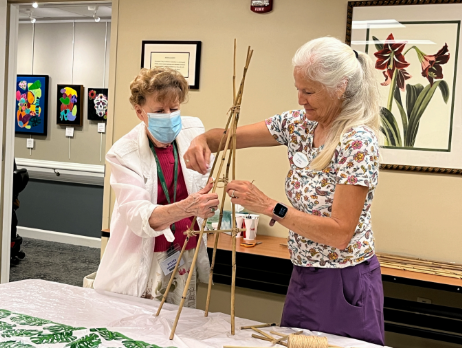
I retired in early 2024, and by August I was working as a horticultural therapist in a senior living community, serving residents in memory care, assisted living, and independent living.
I also have the flexibility to work at camps and community events, using my Master Naturalist training and horticultural therapy programming to help children and people with special needs connect with nature.
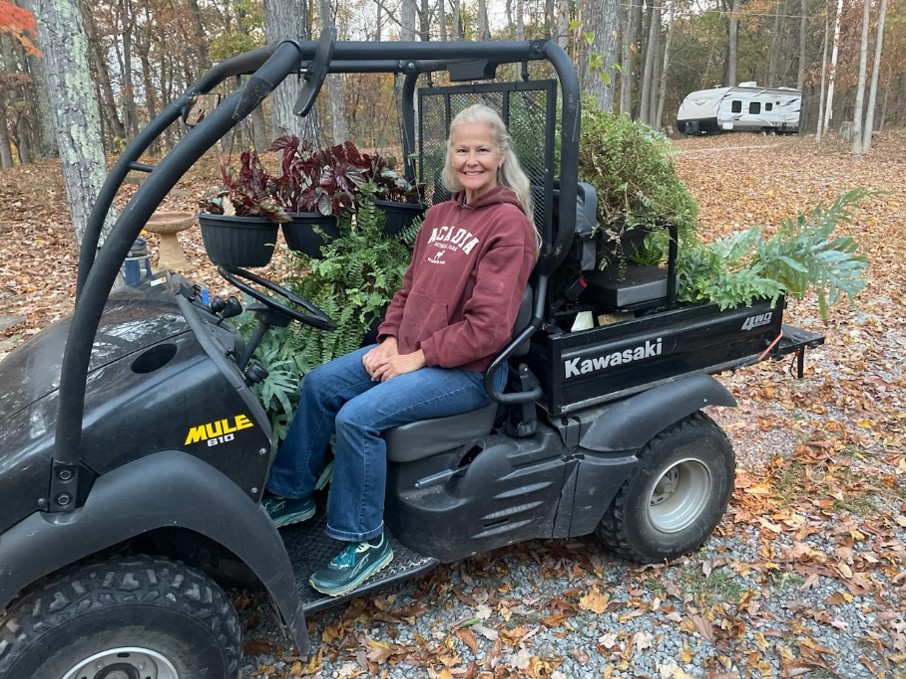
My second career allows me to bring together two long-standing themes in my life: caring for people and working with plants.
Tips and Considerations for a Second Career
- Plan and begin preparing now. Identify the education and experience you will need, such as horticultural therapy certificate courses, Master Gardener or Master Naturalist training, and American Horticultural Therapy Association webinars.
- Consider the financial and family impact. Think through income changes, insurance coverage, and the effect the transition may have on those close to you.
- Plan a thoughtful transition with your employer. Allow enough time to help find and train a replacement. Explore whether part-time work could ease the transition.
- Look for opportunities in your current role. Could you use your horticultural therapy skills at work? Offer sessions for staff or clients, plan a therapeutic garden, or lead a workshop?
- Take one step every week toward your goal. Read an article, attend a class or webinar, connect with a practitioner, or work on an activity that moves you toward your goal.
- Keep a journal. Record progress, list activity ideas, observations, adaptations, and resources you may want to use later.
- Build your supplies gradually. Collect useful materials, grow plants and herbs, and look for supplies at thrift stores.
- Maintain your credentials. As you prepare for a new career, keep any current professional licenses and certifications active until your transition is secure.
Evelyn is an HTI graduate and lives along the Shenandoah River in the Ridge and Valley region of northwestern Virginia. She works at Shenandoah Valley Westminster-Canterbury, providing horticultural therapy for residents in memory care, assisted living, and independent living.
Join HTI at the AHTA Conference this Fall
The Horticultural Therapy Institute is proudly sponsoring the opening reception and “Moth Hour” at the fall American Horticultural Therapy Association annual conference in San Francisco. Many of the faculty will be there to engage with current, past and potential students. Come and meet HTI director, Rebecca Haller, HTR; instructor, Colleen Griffin, HTR; instructor, Erin Lovely, HTR, Jay Rice, Ph.D and instructor Karen Kennedy, HTR. Hope to see you there!
HTI Kudos! Graduates Receive Credentials
Sadie Kaplan, HTR
After working in and completing my internship at a school that specialized in education for students with developmental and intellectual disabilities, I switched into healthcare and am currently working as a geriatric LNA. I fell in love with this population and am currently in pursuit of my nursing degree. With my HTR credential, my goal is to implement horticultural therapy within the geriatric population within both an acute and clinical setting. I am also currently studying to take the board certification test later this fall! I would like to give a huge shout out and thank my advisor, Kathy Perry, MA, OTR/L, HTR, for all her encouragement, support and patience throughout the entire process!
Kate Maunz, HTR
I had an incredible internship at the NYU Langone Horticultural Therapy Program. Everyone I worked with is so knowledgeable, compassionate, and dedicated to the people and the program. It was such a gift to learn from them. I am currently working as a community residential and day services administrator supporting people with intellectual and developmental disabilities. My hope is to build an HT program with my current employer and having HTR (and eventually HT-BC) will support this dream.
Brenda Spoelstra, HTR
I am happy to have met this milestone in my journey with horticultural therapy. In my experience, the pandemic set me on this path to help others find solace through nature, and I found this to be true through my internship. Working with people at an assisted living and memory care, the plant-based activities woke up their senses and brought improved mood. After getting my certificate from HTI, I really did not have concrete ideas of where and what population I would engage with, but it goes back to my premise that I will land where the need is. I do garden design, but I believe HT has taught me how to be more mindful of how these gardens will be used. My hope is to one day design gardens with the primary purpose of horticultural therapy programs. I’m pioneering HT in my communities and tilling the soil (pun intended) to grow as an HTR.
Denise Williams, HTR
My journey to becoming a registered horticultural therapist has bridged my background as a registered nurse with my passion for nature and nature-based healing and interventions. The Horticultural Therapy Institute provided me with a strong foundation in horticultural therapy along that path. Adjacent to the HTI certificate program, I earned my master’s degree in horticulture, with a concentration in Horticulture and Human Health, from Colorado State University. For my final work, I completed a literature review on Therapeutic Gardens for Pediatric Palliative Care; blending my clinical nursing background with my studies in plant-human sciences. Currently, I work in the historic greenhouse at Newfields, the former Indianapolis Museum of Art. I am passionate about expanding horticultural therapy programming through collaboration, future research in the field, and potentially launching my own practice in horticultural therapy. I am immensely grateful to HTI for providing me with the foundational and essential tools for this impactful pursuit. My journey toward becoming a horticultural therapist has mirrored the transformation of a garden; allowing me to evolve alongside the plants utilized to foster connection, renewal, resilience, healing and therapeutic growth in others.
Lara Fahenstock, THP
I am the Senior Director of Therapeutic Gardens and Belonging at Denver Urban Gardens. I lead a team that develops strategies to foster connections among people, their gardens, and communities. In addition, I also guide community efforts to develop therapeutic gardens and provide training and support to teachers, staff, and parents interested in using gardens as outdoor classrooms and spaces for socio-emotional learning. I facilitate small-group HT workshops within DUG gardens, often focused on building life and job skills.

Chelsea Korzenko, THP
“Keep going—you will grow through this” is a quiet anthem at Daffodilly Farms. From tending to the soil to interacting in a TH session, it’s an empowering message that has inspired so many healing hearts. My own healing journey with therapeutic horticulture, what I learned at HTI, and years of hands-on experience have shaped the work I now bring to our local community. We partner with organizations serving people affected by trauma, designing four- to six-week programs and quarterly workshops around their needs. Therapeutic horticulture is wonderfully flexible: we can bring a program to an organization, offer it at our small farm, or adapt it for different groups within an organization. One especially meaningful project was a recent 2-part family series “Growing Together” with Cherokee Family Violence Center (https://www.cfvc.org/). Eight mothers and their children of varying ages participated, with 100% attendance throughout the series.
Tracy Boehm Barrett, THP
I most recently have been working with our local botanical garden as an advisor for strategic planning and spent some time with a cohort of occupational therapy students from the University of Montana as they tested out a dementia friendly garden program as part of their community-based educational experiences. Currently, I am focused on building capacity and collaborating to bring more HT opportunities to our area. I will be attending the AHTA conference in San Francisco, and I look forward to learning and growing alongside others in the field